
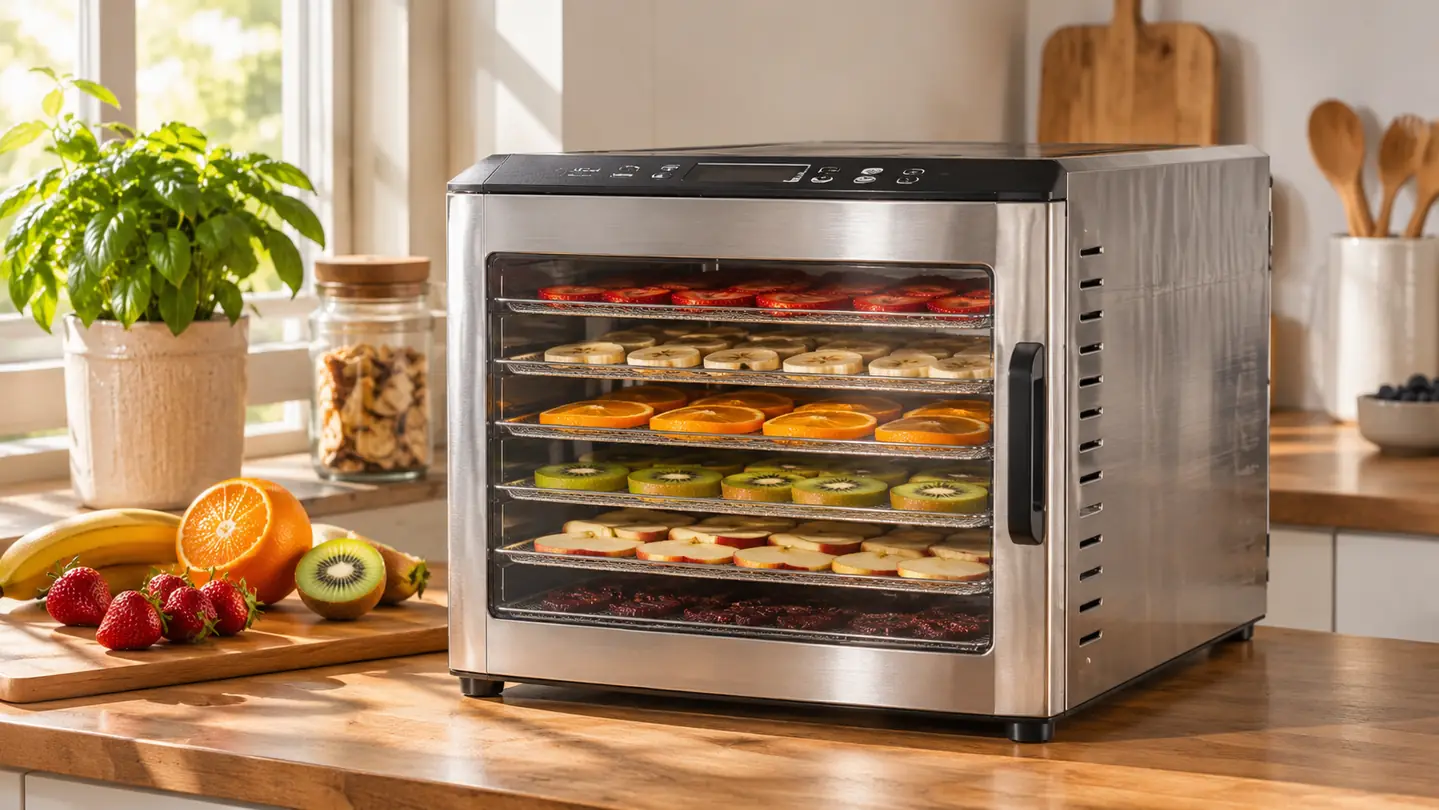
I bought the Cosori Food Dehydrator for one reason: Biscuit, my 9-year-old beagle mix, had stopped eating his kibble again. The sensitive stomach that has followed him his whole life meant store-bought treats were a gamble, and the "natural" ones were expensive enough to make me wince. So I started batch-cooking for him on Sunday afternoons, and within a month I realized I needed a way to make treats and toppers that would last. After months of weekly use, this Cosori dehydrator has earned a permanent spot on my counter, and I want to tell you exactly what that has been like.
This is a long-term review from a 58-year-old home cook in Madison, Wisconsin, not a first-week impression. I have run this machine just about every Sunday for months, dried sweet potato slices, chicken breast strips, beef liver, apple chips, and more, and I have strong opinions about what it does well and where it asks for patience.
The Quick Verdict
A quiet, roomy, dependable dehydrator that earns its place if you cook for your dog regularly. It is not fast, but it is consistent, and the stainless steel trays make cleanup easy enough that I actually keep using it.
Amazon Check Today's Price →Want a dehydrator that actually earns counter space?
The Cosori Food Dehydrator gives you 6 stainless steel trays and 6.5 square feet of drying space in a machine quiet enough to run overnight. It has been the backbone of my Sunday dog-kitchen routine for months.
Amazon Check Today's Price on Amazon →How I've Used It
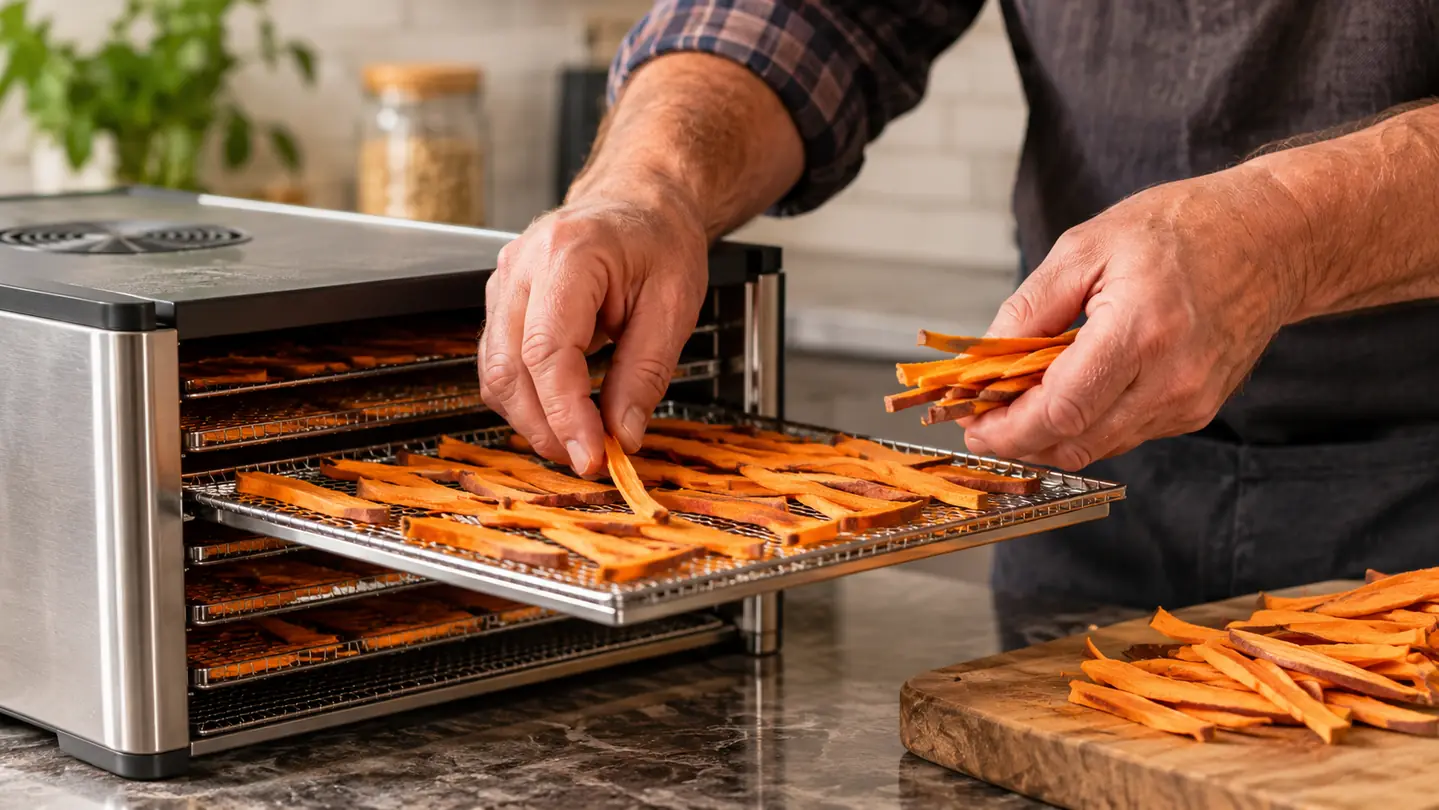
My routine looks like this: Sunday afternoon, I slice whatever is going into the dehydrator, load the six stainless steel trays, and set the temperature. For sweet potato slices I run it around 135 degrees F for six to eight hours. For chicken breast strips destined for training treats, I go a little higher and check them at the six-hour mark. For beef liver, I keep the pieces small and uniform so they dry evenly. I settled on these numbers after a few trial batches, and I have written the times on a sticky note that lives on the side of the machine so I do not have to look them up.
The temperature range on this unit runs from 95 to 165 degrees F, which has covered everything I have needed. I have used the fruit roll sheet for a batch of apple puree, and I have used the mesh sheet for smaller pieces that might fall through the tray gaps. The 600-watt motor and rear-mounted drying fan do the work quietly; the spec sheet says noise stays below 48 dB, and in practice I have run it overnight in the kitchen without it bothering anyone upstairs. The batch that convinced me this machine belonged in my kitchen happened on a Saturday in early February. I had a pound and a half of sweet potatoes that were starting to soften, so I sliced them into quarter-inch rounds, loaded all six trays, and set the temperature to 135. Eight hours later I had a full container of chewy, faintly sweet treats that Biscuit went through in about three weeks. That was the moment I stopped thinking of the dehydrator as an experiment.
I have also learned what not to do. The first time I made chicken strips, I cut them unevenly and ended up with dry edges and chewy centers. Now I take the extra two minutes to keep pieces the same thickness, and the results are far more consistent. The machine does not fix sloppy prep, but it rewards careful prep. Before I bought the dehydrator, I tried making treats in the oven. Even at the lowest setting, my oven runs hot, and I burned two batches of sweet potato slices before I gave up. I also tried buying single-ingredient treats at the pet store, but the bags were small and the prices added up fast. The dehydrator solved both problems, but it took me a few batches to learn its habits.
What the 6.5 Square Feet of Drying Space Actually Means
The headline number on this Cosori dehydrator is 6.5 square feet of drying space across six stainless steel trays. That number sounded abstract until I loaded a full batch of sweet potato slices and realized I could make nearly two weeks of Biscuit's treat supply in one afternoon. For a single-dog household, that is a lot of capacity. For someone with a bigger dog or multiple pets, it means you are not running the machine every other day. To make it concrete: two pounds of sweet potatoes before slicing fills all six trays, and the finished batch fills a quart-sized container. At two or three pieces a day, that is roughly two and a half weeks of treats from one Sunday session.
The trays are stainless steel, which is the main reason I chose this model over cheaper plastic alternatives. My old dehydrator, a round plastic model I bought years ago, had trays that warped in the dishwasher and held onto the smell of garlic from the one time I dried seasoned vegetables. These stainless steel trays come out of the dishwasher without warping, they do not hold onto odors, and they have held up to months of weekly use without staining. The unit itself is rectangular, which fits neatly on my counter against the backsplash, and the dimensions, 17.8 inches deep by 13.4 inches wide by 12.4 inches high, are easy to plan around. I measured the counter before I bought it, and I am glad I did.
One honest note: the 18.1-pound weight means this is not a machine you will tuck into a cabinet every week. Mine lives on the counter, and that is fine, because I use it that often. If you only plan to dehydrate a few times a year, the counter space might feel like a lot. I would rather have it out where I can see it; the weeks it is tucked away are the weeks I do not make treats. For me, the counter space is the price of actually using the thing, and I am willing to pay it.
How the Drying Performance Holds Up Over Months
The thing I was most worried about, before I bought it, was uneven drying. I had used an old round dehydrator years ago with a top-mounted fan, and I spent forever rotating trays. The Cosori's rear-mounted drying fan and upgraded airflow technology have made tray rotation a thing of the past for me. The bottom trays and top trays finish at about the same time, as long as I keep piece sizes consistent. I tested that early on by loading the machine unevenly on purpose, three full trays on top and one on the bottom, and the top trays finished about an hour before the bottom one. Even that gap was smaller than the old machine's, and it only happened because I loaded it badly on purpose.
The 600-watt motor has not lost any steam after months of weekly use. I have run this machine for full eight-hour sessions, let it cool, and started another batch the same day. The exterior stays cool enough that I do not worry about it being near the toaster, and the noise level genuinely is low enough to run overnight. I have woken up to the smell of dried sweet potato rather than the sound of a fan working too hard. The one batch that went wrong was a tray of chicken strips I had rinsed and not patted dry; the extra moisture just meant a longer drying time and some leathery edges. That was my mistake, not the machine's, and I have not repeated it.
I will also tell you what I tell everyone who asks: dehydrating is slow. A batch of chicken breast strips takes six to eight hours. Liver takes longer. If you need treats this afternoon, this is not the tool for that job. The payoff is that the results keep for weeks in an airtight container, and I know exactly what is in every single piece. I store finished batches in glass jars with tight lids, and the longest I have pushed a jar of sweet potato treats is about five weeks. They were still dry, still smelled fresh, and Biscuit finished them without complaint. When a batch is bigger than the jars can hold, the overflow goes into the chest freezer in the garage, which is how I keep a steady supply without running the dehydrator every week.

Cleanup, Storage, and the Parts That Surprised Me
The stainless steel trays are the reason I have kept using this machine. I can rinse them under hot water immediately after a batch, and most of what sticks comes right off. For stickier jobs, like beef liver, a short soak handles it. The worst cleanup so far was a liver batch I let sit for a few hours before tackling; a twenty-minute soak in hot water with a drop of dish soap took care of it, and the trays came out looking the same as the day I bought them. The mesh sheet and fruit roll sheet need gentler handling, but they have held up fine as long as I do not fold them aggressively. I keep both flat, slid between two cutting boards in the cabinet, because a fold leaves a crease that never quite comes out.
The included components are generous: the dehydrator itself, six stainless steel trays, one fruit roll sheet, and one mesh sheet. I use the mesh sheet for small pieces like diced apple and the fruit roll sheet for purees, and I have not needed to buy anything extra. The 2-year manufacturer warranty covers the machine, which is longer than I expected at this price point.
What surprised me most was how quiet it is. The spec sheet says below 48 dB, and that has matched my experience. The first night I ran it overnight, I woke up at 6:30 and walked into the kitchen to check that it was still on, because I could not hear it from the bedroom. I have also run it while watching television in the next room, and the low hum fades into the background within a few minutes. It is not silent, but it is the kind of appliance you forget is running.
What I Liked
- Six stainless steel trays with 6.5 square feet of drying space handle a full week of treats in one batch
- Quiet enough to run overnight, with noise levels below 48 dB
- Rear-mounted drying fan and upgraded airflow mean no tray rotation mid-batch
- Stainless steel trays rinse clean quickly and do not hold onto odors
Where It Falls Short
- 18.1 pounds and a 17.8 by 13.4 inch footprint mean it lives on the counter, not in a cabinet
- Dehydrating is slow; most batches take six to eight hours
- Even drying depends on cutting pieces to a consistent thickness
After months of weekly use, the Cosori has dried everything I have loaded into it evenly, quietly, and without a single tray warping. That is the whole job, and it does it.
Who This Is For
This Cosori dehydrator is for someone who has already decided to cook for their dog and wants to make that habit sustainable. If you batch-cook on weekends, if you want to control exactly what goes into your dog's treats, or if you are tired of paying premium prices for tiny bags of single-ingredient treats, this machine will pay for itself in a few months of use.
It is also for people who appreciate quiet. The sub-48 dB operation means you can dehydrate overnight or while the family watches a movie, and the stainless steel trays mean cleanup is not a chore you will dread. For a home dog kitchen like mine, where Sunday is prep day, the 6.5 square feet of space lets me do one big batch instead of several small ones. That matters more than I expected, because a single batch day keeps the routine simple enough to actually stick.
Who Should Skip It
If you only want to dehydrate occasionally, or if you are not sure your dog will even eat homemade treats, this is more machine than you need. It is 18.1 pounds and it will live on your counter, not in a drawer. If you are looking for a quick way to make treats the same afternoon you decide to make them, dehydration is not that method, and no dehydrator will fix that.
I would also tell someone with a very small kitchen to measure their counter first. The 17.8 by 13.4 by 12.4 inch footprint is not huge, but it is permanent once you start using it weekly. And if you have no interest in cleaning trays, even stainless steel ones, this hobby will not stick.
One more thing I want to say plainly: I am a home cook, not a vet. I checked every change to Biscuit's diet with our veterinarian before I started, and I would tell you to do the same. Dehydrated treats are a supplement to a balanced diet, not a replacement for one, and your vet is the right person to help you figure out what your dog actually needs.
Ready to make your Sunday batch last for weeks?
The Cosori Food Dehydrator has handled months of weekly use in my home dog kitchen without missing a beat. Six stainless steel trays, quiet enough to run overnight, and backed by a 2-year warranty.
Amazon Check Today's Price on Amazon →