
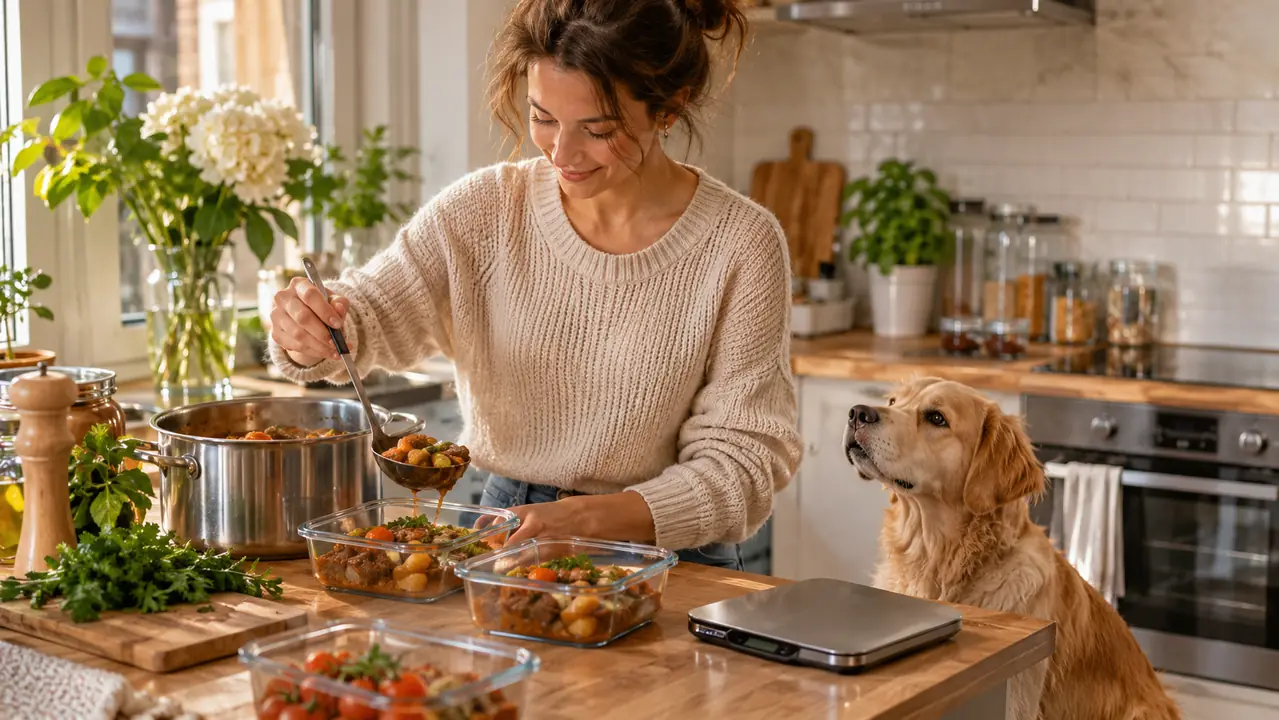
Biscuit is a nine-year-old beagle mix who spent most of his life walking away from his bowl. For years I told myself he was just picky. Then a run of upset stomachs landed us at the vet, and the conversation that followed changed how I feed him. I started batch-cooking his meals on Sunday afternoons, and within a few weeks I realized I could not do it well without a scale I trusted. That is how the Etekcity kitchen scale ended up on my counter, and why it has stayed there for months.
Before I go any further, the usual disclaimer: I am a home cook, not a veterinarian. If you are thinking about cooking for your dog, talk to your vet first, especially about portions and supplements. What I can tell you is what works in my own kitchen, week after week, and what has held up under real use.
The Quick Verdict
A dependable, easy-to-clean scale that makes portioning homemade dog food simple enough to stick with. The USB-C rechargeable battery and waterproof build earn their keep in a busy kitchen.
Amazon Check Today's Price →Weighing Biscuit's dinner in grams changed my whole Sunday routine.
A consistent portion is the entire point of cooking for a dog with a sensitive stomach. The Etekcity scale reads in 1-gram increments up to 22 pounds, and the stainless top wipes clean in seconds.
Amazon Check Today's Price on Amazon →How I've Used It
Every Sunday afternoon, I cook a big batch of Biscuit's food: a lean protein, a couple of vegetables, and a grain, all simmered until soft. Once it cools, I weigh each portion before it goes into a container and into the chest freezer in the garage. The scale sits on the counter the whole time, and it has become as much a part of the routine as the pot itself.
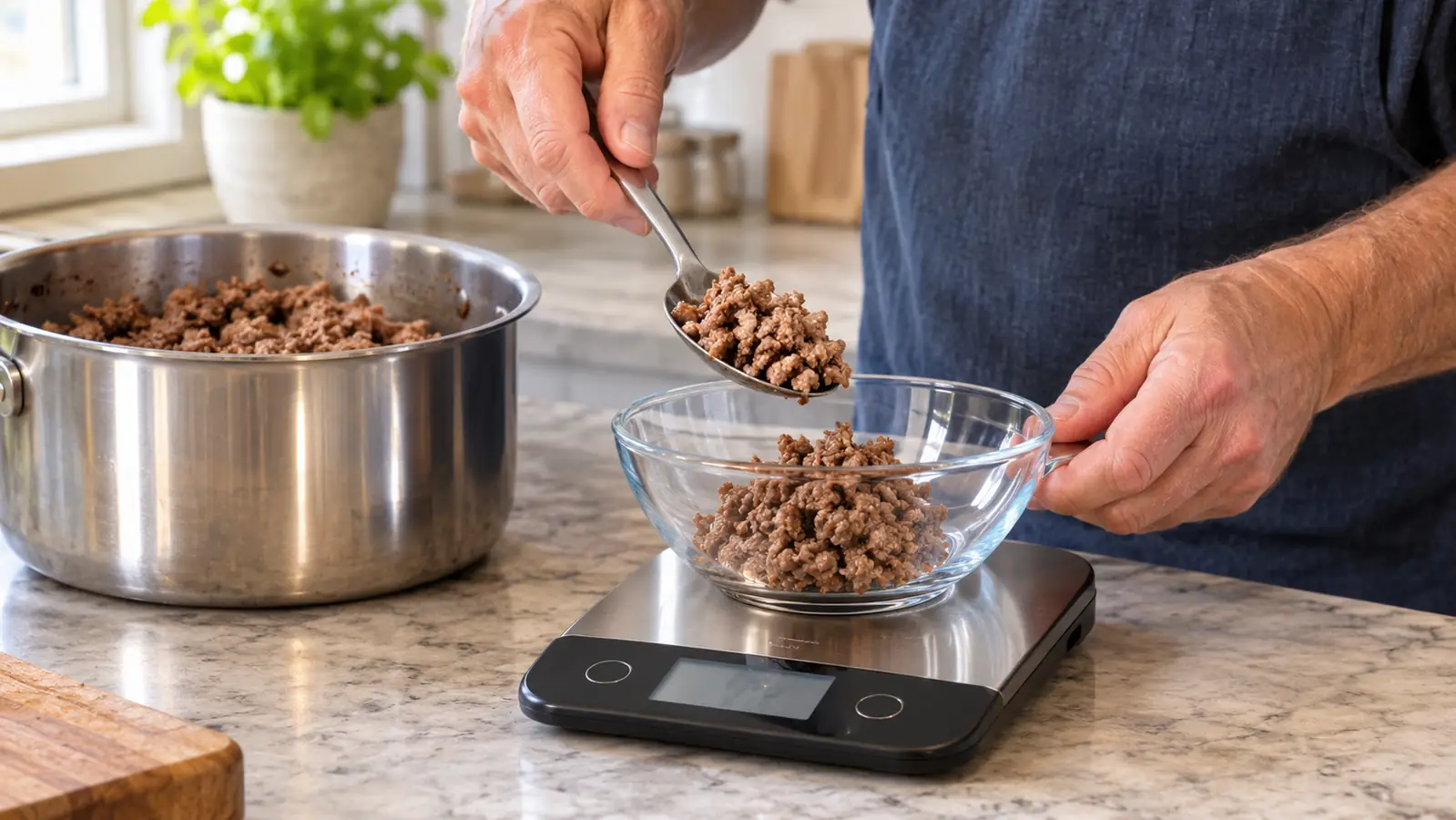
I work in grams rather than cups because grams do not change depending on how tightly you pack a measuring cup. The scale reads from as little as 2 grams up to 22 pounds, in 1-gram steps. That is more precision than a dog dinner needs, and exactly what you want when you are dividing a pot of food into seven equal portions.
The USB-C charging is the feature I was most skeptical about, and it turned out to be the one I appreciate most. I charge it every few weeks, and the backlit LED display is easy to read even when I am in the kitchen before the sun is fully up. The auto shut-off means I never come back to a dead battery because I forgot to switch it off.
Why I Weigh Instead of Guess
When Biscuit's stomach problems first started, the vet asked me a question I could not answer: how much was he actually eating? I had no idea. I filled his bowl the way I had for years, by eye, and topped it off when he looked hungry. That is a reasonable way to feed a dog on kibble, but it is a poor way to feed a dog on food you cooked yourself. Every batch is slightly different in moisture and density, so a scoop of Monday's stew is not the same as a scoop of the next batch.
Weighing every portion fixed that. Now each container holds the same number of grams, and I can tell the vet exactly what Biscuit eats in a day. If the vet wants to adjust his weight, we change the grams and see what happens. That is the kind of plain, measurable feedback a vet can actually use.
The scale also keeps the recipe itself honest. When I add a new vegetable or switch proteins, I weigh the finished batch and divide it evenly. The milliliter and fluid ounce settings are handy when a recipe calls for water, and the pound and ounce setting is useful when I am weighing a big pot of meat. Five units sounds like more than I need, and honestly it is, but I use three of them every week.
The 2-gram minimum is another quiet detail I appreciate. When I am adding a small amount of a new ingredient to test whether Biscuit tolerates it, I can weigh it properly instead of eyeballing a pinch. Small changes are easier to track when the scale can see them.
What the Specs Actually Mean in a Dog Kitchen
Spec sheets are usually boring until the day they save you. The two that matter most here are the IPX6 waterproof rating and the stainless steel top. Cooking for a dog is messier than cooking for people. Meat drips, broth splashes, and the scale sits right in the middle of it. I rinse mine in the sink after a batch and wipe it dry, and it has not blinked in months of that treatment.
The stainless steel surface is the other quiet workhorse. It does not soak up smells the way plastic can, and a damp cloth takes care of the worst of it. The scale itself weighs about 0.7 kilograms, so it is heavy enough to stay put when I scoop meat onto it, but light enough to tuck into a drawer when the counter needs a clear sweep.
The rechargeable battery is the feature I would not have predicted I would love. I have owned plenty of kitchen scales that ate button batteries, and I always seemed to be out of the right size at the wrong moment. This one charges with the included USB-C cable, the same kind my phone uses, and the battery has lasted weeks between charges. The listed readout accuracy of 2.86 grams is more than enough for portioning dog food; I notice it far more when I am weighing flour for my own baking.
The large display and backlight matter more than you might think. My kitchen gets good morning light, but by late afternoon, when I am portioning the cooled batch, the counters are in shadow. The backlit LED display stays readable without me squinting, which is exactly the kind of small thing you do not notice until it is missing.
How It Holds Up Over Months of Weekly Use
I have had this scale on my counter since late last fall, and it has weighed close to a hundred pounds of cooked food by now, a few pounds at a time. The display is still crisp, the charging cable still clicks in cleanly, and the stainless top still looks the way it did the day it arrived. Nothing has loosened, nothing has fogged, and nothing has stopped working.
The one thing I have learned is to portion in the same order every week. I set a container on the scale, fill it until the display matches the number I wrote on the freezer list, and move on to the next one. It sounds dull, but it is the difference between seven equal dinners and seven dinners that only look equal.
I will also admit that I use the scale for my own cooking more than I expected. Bread dough, pasta portions, the right amount of rice for two people. Once a scale is out on the counter, it turns out you find reasons to use it. But its main job, every single week, is making sure Biscuit's dinners come out the same.
Weighing each portion in grams meant I could finally tell the vet exactly what Biscuit eats in a day, and that changed how we manage his stomach.
A Typical Sunday With the Scale
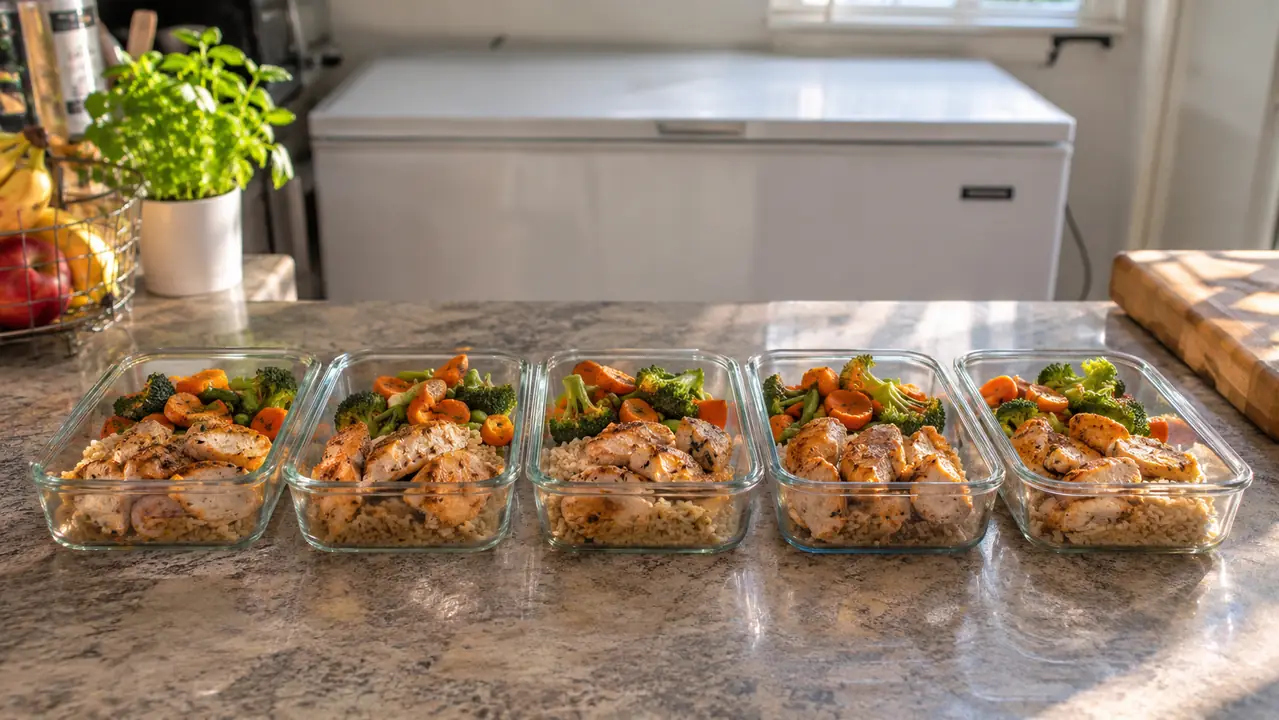
In case it helps to picture the routine, here is what a typical Sunday looks like at my house. I brown the protein first, usually turkey or a lean beef, and let it cool in the pot. While it cools, I weigh the vegetables and grain before they go in, so the recipe itself is consistent. Once the whole batch is cooked and cool enough to handle, I set a container on the scale, fill it until the display hits the number on my list, and repeat until the pot is empty.
The whole weighing part takes maybe fifteen minutes. The scale sits flat on the counter, the display is bright enough to read at a glance, and the stainless top wipes clean before I move on to the next container. By the time the freezer is stocked, the scale has been rinsed once and dried with a dish towel, and it goes back in the drawer until next Sunday.
I have learned to charge it on Saturday evenings, the same night I take the meat out of the freezer to thaw. That way the battery is never a question when I need it. The auto shut-off means I do not have to think about it, and the USB-C cable lives in the drawer right below the scale, so nothing gets lost.
What It Won't Do (and What to Do Instead)
For all that this scale does well, it will not tell you what your dog should weigh, how much he should eat, or whether a homemade diet is right for him in the first place. Those are questions for a veterinarian, and I would not want a kitchen appliance making that call. What the scale does is give you and your vet a shared number to work with, which is more useful than a guess.
It also will not portion the food for you. I still measure each container by hand, and I still write the gram target on a list that lives on the fridge. The scale makes the job accurate, not automatic. If you are looking for a tool that does the thinking for you, this is not it, and honestly I would not trust one that tried.
What I Liked
- Reads in 1-gram increments up to 22 lb / 10 kg, so portions stay consistent batch after batch
- IPX6 waterproof stainless top rinses clean after messy cooking sessions
- USB-C rechargeable battery lasts weeks and charges with a cable I already own
- Backlit LED display is easy to read in low light
- Five measurement units cover grams, ounces, pounds, and water-based volume
Where It Falls Short
- The mini form factor is a tight fit for very large mixing bowls; I weigh into smaller containers instead
- It needs a charge every few weeks, so I keep the USB-C cable near the scale, not buried in a drawer
- The milliliter and fluid ounce settings only track milk and water, so I still use grams for broth and anything else
Who This Is For
If you cook some or all of your dog's food at home, or you are thinking about it, this scale is for you. It is for the person who wants their dog's dinner to be the same on Tuesday as it was on Sunday, and who wants to be able to tell a vet exactly what is in the bowl. It is also for anyone who has ever looked at a measuring cup of cooked meat and wondered whether it really matched last week's cup.
It is especially useful if you are cooking for a dog with a sensitive stomach, a picky eater, or an older dog whose weight needs watching. In all of those cases, consistency is the point, and a scale that reads to the gram makes consistency automatic. You still have to do the cooking. The scale just makes sure the cooking actually means something.
This is also a good scale for someone just starting to cook for their dog. You do not need a fancy setup to begin. A pot, a freezer, and a scale that reads in grams will get you through the first month, and by then the habit will have settled in.
Who Should Skip It
If you feed your dog kibble straight from the bag and never plan to cook, you do not need this scale. A measuring cup is fine for that job. If you are hoping a homemade diet will fix a medical problem on its own, skip the scale and call your vet first. Cooking is not a treatment, and no kitchen tool replaces a professional's advice.
And if your dog is doing fine on the food you already feed, and your vet is happy with his weight and his energy, then you are already doing the right thing. Buy a scale when you need one, not because someone on the internet made you feel behind.
And if you already own a kitchen scale you trust, there is no urgent reason to replace it. The Etekcity is a good one, but the real change in my kitchen was the habit of weighing, not the brand of scale. Buy it if you need a scale, not because a review convinced you that your current one is failing you.
For me, the Etekcity scale is the difference between cooking for Biscuit and cooking for Biscuit on purpose. The portions are the same, the recipe is the same, and the vet and I are working from the same numbers. That is a small thing, and it is also the whole thing.
A gram scale belongs in every dog kitchen.
Months of weekly use have made this Etekcity a permanent part of my Sunday routine. If you are cooking for your dog, weigh the portions, keep the portions honest, and let your vet guide the rest.
Amazon Check Today's Price on Amazon →