
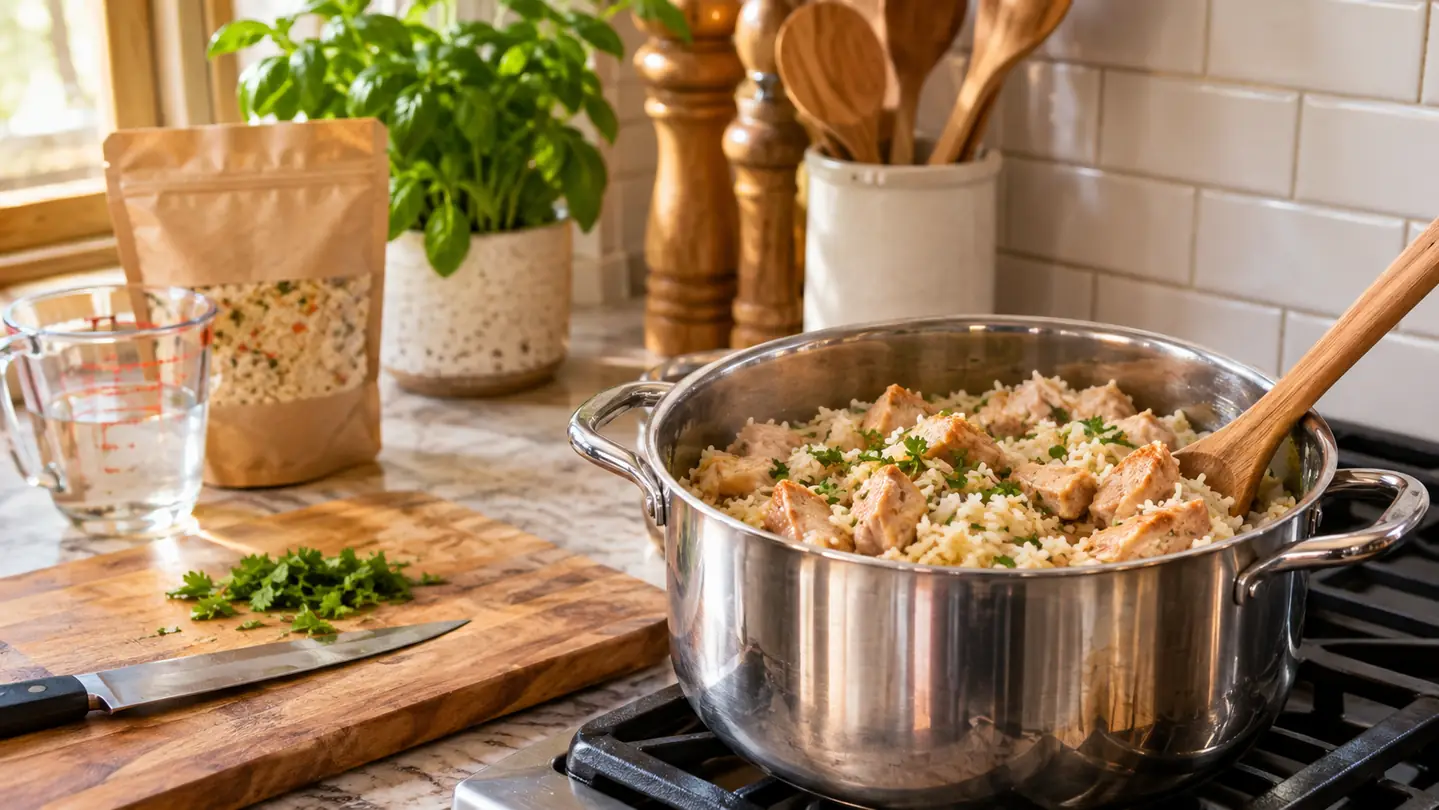
I started cooking for Biscuit the week he turned nine. He is a 28-pound beagle mix with a sensitive stomach, and he had spent the better part of a year walking away from kibble, then eating it, then looking sorry about it. My vet agreed that a fresh-cooked diet was worth trying, but she said one thing I have never forgotten: cooking chicken and rice is the easy part. The hard part is making sure the bowl is actually complete. That is where a nutrient blend like JustFoodForDogs comes in.
If you are here, you probably already cook for your dog, or you are about to start. You have read the ingredients on a bag of kibble and decided you could do better with a pot, a cutting board, and an hour on a Sunday. You can. But a homemade diet built on meat and starch alone will miss things over time, and missing them quietly is the problem. This guide is the system I have used for months: how to cook the base, how to add the blend, how to portion it, and how to check it with your own vet before you switch.
The easiest way to finish a homemade bowl correctly
JustFoodForDogs Nutrient Blend is a dry multivitamin mix made from human-grade ingredients, designed to be added to a homemade chicken and white rice recipe. It comes with full cooking instructions so you know exactly how much to use per batch.
Amazon Check Today's Price on Amazon →Step 1: Talk to your vet before you change the bowl
I know it is not the step anyone wants to read first. I put it first anyway because it is the one that protects you and your dog. A homemade diet is not automatically better for every animal. Puppies, seniors, and dogs with existing health conditions have different needs, and a dog who is thriving on a complete commercial food may not need you to change anything at all.
Tell your vet what you are planning: a cooked chicken and white rice base, plus a nutrient blend designed for homemade dog food. Ask whether the blend's recipe fits your dog's age, weight, and health history. For Biscuit, the answer was yes, with a follow-up visit about six weeks after the switch to check his weight and coat. That visit is the part most people skip, and it is the part that turns a good idea into a safe one.
When I first called my vet's office about this, I expected a quick yes. Instead, the technician asked what recipe I planned to use and how I intended to balance it. I had not thought that far. She suggested I bring the nutrient blend's label and the recipe to an appointment. I did, on a rainy Thursday in October, and we went through the ingredients line by line. That conversation changed how I cook. I stopped treating homemade dog food as a project and started treating it as a prescription I happened to make in my own kitchen.
Step 2: Understand what a nutrient blend actually does
Here is the honest version of what I learned. Chicken and white rice are a wonderful base for a sensitive stomach, but they are not a complete diet by themselves. A dog eating only meat and starch for months will slowly miss out on vitamins and minerals. The signs are not dramatic at first. Dull coat, dry skin, low energy, a stomach that seems fine and then is not. That is what the blend is for.
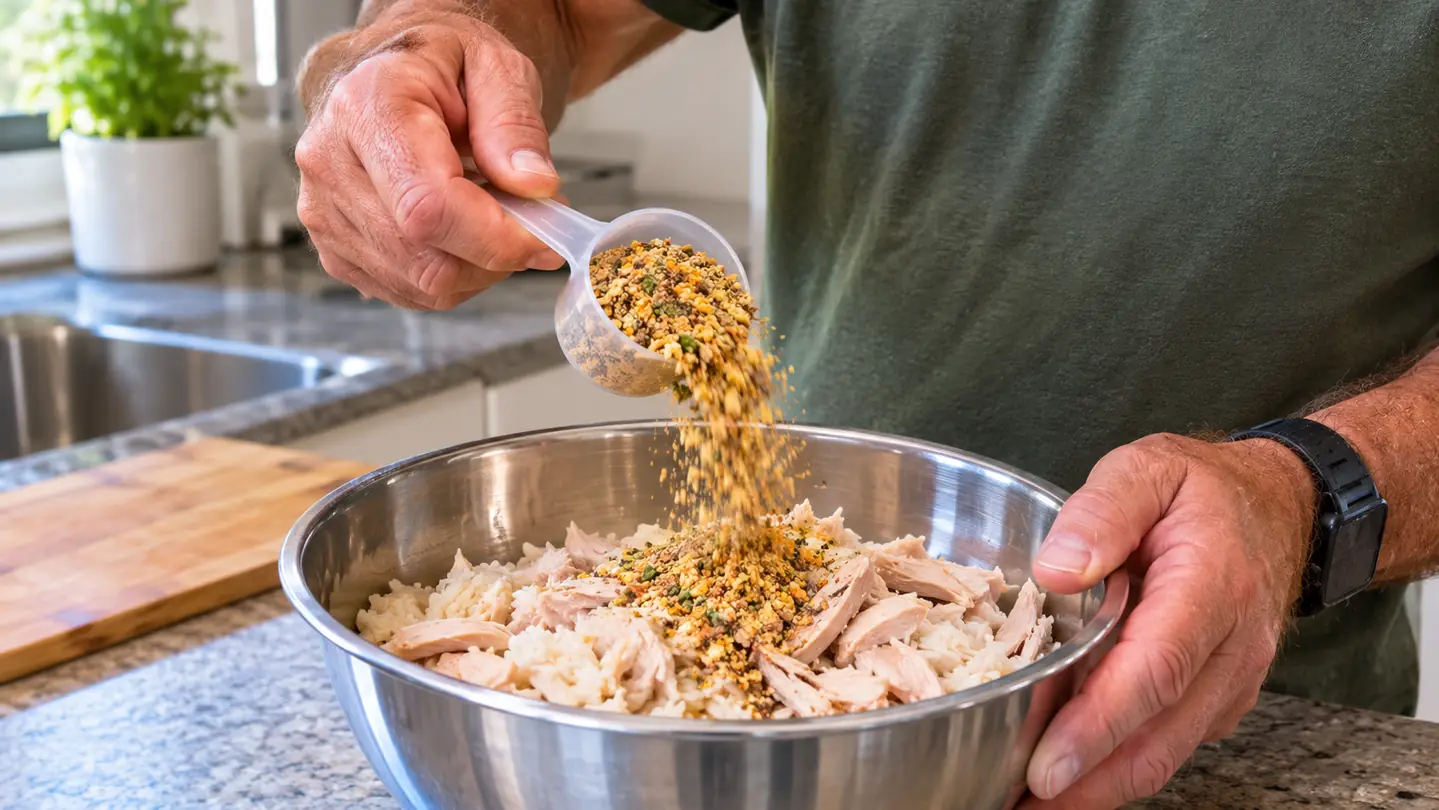
JustFoodForDogs Nutrient Blend is a dry multivitamin mix compounded from human-grade nutraceuticals regulated by the FDA. The Chicken & White Rice version is a proprietary blend balanced for dogs and puppies, and it is formulated with digestive health in mind. What that means in my kitchen is simple: I add a measured scoop of the blend to the cooked base, and I do not have to invent my own vitamin math. The recipe and step-by-step cooking instructions come with the blend, so the guesswork is already done.
Before I found this system, I tried to balance Biscuit's food myself with a recipe from an online forum. It called for a pinch of this and a spoonful of that, and I kept a spreadsheet for three weeks to track every meal. I still could not tell you whether I was giving him too much of one thing or not enough of another. The blend took that worry off the counter. It is not a seasoning. It is the part of the meal that makes the meal complete, and it is measured by the recipe, not by feel.
Step 3: Cook the base in a batch you can actually use
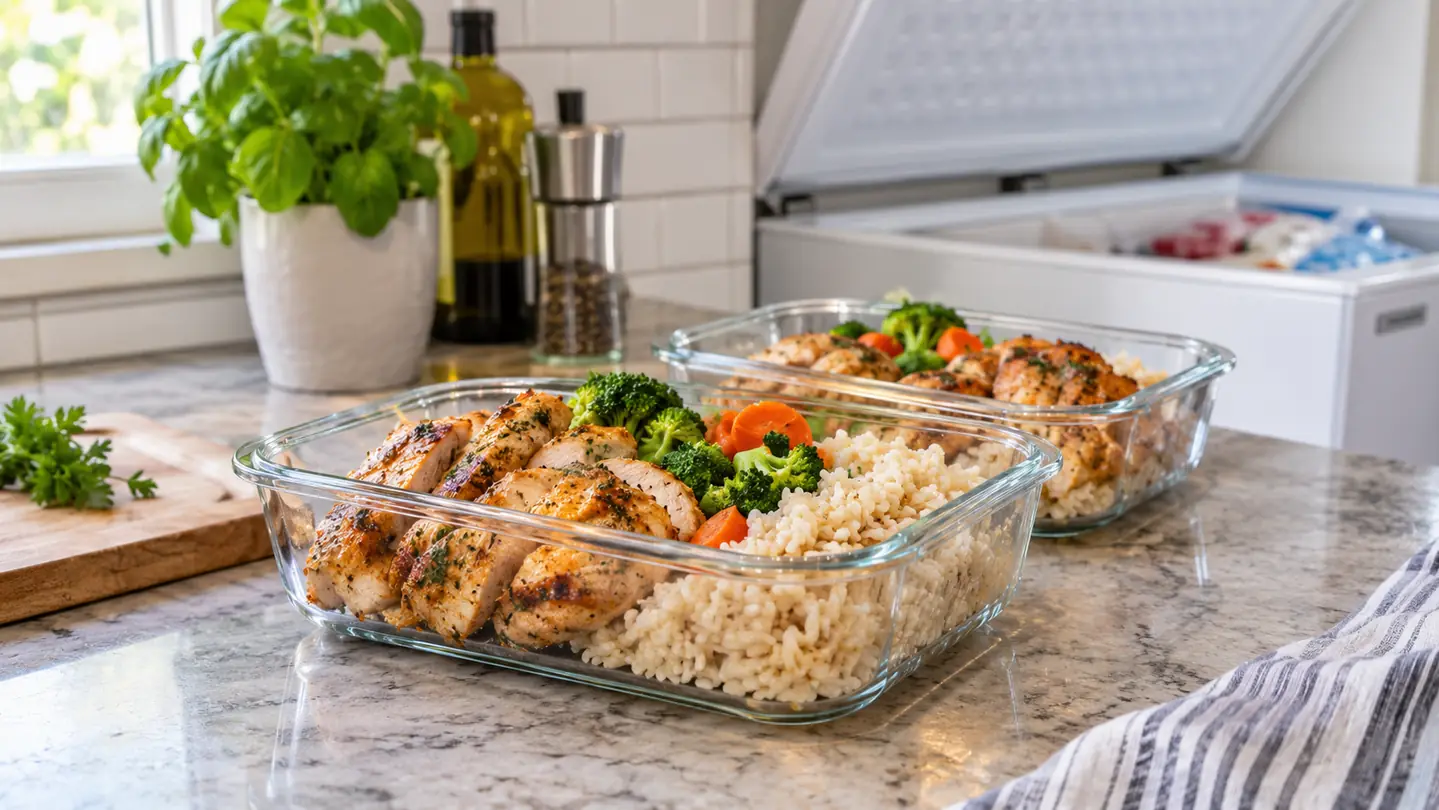
I cook on Sunday afternoons, the same way I used to prep school cafeteria lunches. I make enough chicken and white rice for the week, let it cool, and portion it into freezer containers. A chest freezer in the garage holds the extra portions. If you have never batch-cooked for a dog, start with a smaller batch the first time so you can see how much your dog actually eats in a day.
Keep the base plain. No salt, no onion, no garlic, no butter, no seasoning blends. Chicken and white rice, cooked and cooled. The blend is what carries the nutrition, so the base does not need anything added to it. I weigh Biscuit's portions with a kitchen scale before I freeze them, because it is much easier to be consistent when every container holds the same amount.
My first batch was a lesson in portion math. I cooked two chicken breasts and one cup of rice, which sounded like plenty, and it lasted exactly two days. The next Sunday I cooked a larger batch, about six pounds of chicken and three cups of rice, and I wrote the date on every container before it went into the freezer. That rhythm has held for months. The chest freezer in the garage now has a shelf labeled Biscuit, and I never have to wonder what is for dinner. I also keep a laminated copy of the recipe taped inside the cabinet door above the stove. That way I do not have to dig through a drawer to find the instructions on a busy Sunday. The recipe card lists the chicken, the rice, the water, and the exact amount of blend for the batch, so nothing gets left out when I am tired or distracted.
Step 4: Add the blend after cooking, not during
This is the step I almost got wrong. The blend is dry, and it is tempting to stir it into the pot while the rice is still hot. Do not do that. The instructions that come with the JustFoodForDogs Nutrient Blend are designed for the finished, cooled base. You measure the blend for the batch, stir it into the cooked chicken and rice after the food has cooled, and then portion it out.
Why does the order matter? Heat can change how some nutrients behave, and the blend is formulated to be added to the finished food. Following the included recipe exactly is the whole point. When I stopped treating the blend as an afterthought and started measuring it like an ingredient, Biscuit's bowl stopped being a gamble and started being a recipe.
I learned this the hard way on a Sunday in November. I was in a hurry, the rice was still steaming, and I stirred the blend into the hot pot because it seemed faster. The batch looked fine, but Biscuit turned up his nose at dinner that night, and I had no way to know whether the heat had changed anything. I threw out the batch and started over. Now I let the cooked base cool for a full hour on the counter, covered, before the blend goes in. It is not a dramatic step. It is the difference between following the recipe and guessing.
Step 5: Portion, freeze, and rotate with a plan
Once the blend is mixed in, portion the food into single-meal containers and freeze what you will not use in the next day or two. I use glass containers because they go straight from the freezer to the fridge and I can see exactly what is inside. Every Sunday I move the coming week's portions from the chest freezer to the refrigerator the night before, so the morning meal is already thawed.
Keep a simple rotation. Oldest portions in front, newest in back. If you cook the same base every week, you will settle into a rhythm quickly. For Biscuit, the change showed up in about three weeks: he stopped walking away from his bowl, his coat looked better, and his stomach stayed settled through the whole month. I am not here to claim the food cured anything. I am here to say the system made his meals consistent, and consistency is what his stomach needed.
One more detail that helped me: I keep a small notebook on the kitchen counter with the date of each batch, the exact amount of chicken, rice, and blend, and a note about how Biscuit did that week. On the first Sunday of December, for example, I wrote 'good energy, coat shiny, no upset stomach.' On a rough week in November, I wrote 'ate slowly, seemed fine by evening.' Those notes let me see patterns that I would have missed otherwise, and they give my vet something concrete to look at during checkups. By the second month, the notebook had turned into a small routine of its own. I check it on Sunday before I cook, so I can see whether the last batch caused any trouble. If the note from the previous week says 'finicky, ate half then finished later,' I know to warm the portions a little more or let the food sit out for a few minutes before serving. If the note says 'clean bowl, normal stool,' I keep the recipe exactly as it is. The notebook is not fancy. It is just a record of what actually happened, and that is worth more than my memory.
What Else Helps
A nutrient blend is the backbone, but a few kitchen habits make the whole routine easier. Use a kitchen scale for portions. Write the date on every container with masking tape and a marker. Keep a small notebook or a note on your phone with the recipe you settled on, including the exact amount of blend per batch, so you are not re-reading the instructions every Sunday. And if your dog is a picky eater, warm the portion slightly before serving. Not hot, just slightly warmed. Biscuit eats a warm bowl far more happily than a cold one. I learned that trick by accident one morning when I was in a hurry and let Biscuit's breakfast sit on the counter while I packed my bag. By the time I set it down, it was room temperature, and he ate it faster than he ever ate a cold portion. Now I take the container out of the fridge about twenty minutes before serving, or I add a splash of warm water and stir. Both work. The point is to take the chill off without cooking the food again.
Two more things worth saying. First, the JustFoodForDogs Nutrient Blend is labeled for dogs one month and up, and the brand formulates it for digestive health, coat, skin, stomach, and weight support. Second, and more important: every dog is different. What works for a 28-pound beagle mix in Madison may not be right for a 70-pound Labrador in Phoenix. That is why the vet conversation in Step 1 is not optional. It is the step that makes all the other steps safe.
The blend is what carries the nutrition. The base is just chicken and rice. Measure the blend like an ingredient, not an afterthought.
Start your batch this Sunday with a complete bowl
JustFoodForDogs Nutrient Blend for homemade dog food comes with the recipe, the step-by-step instructions, and the measuring system you need. Cook the base, add the blend, portion it out, and let your vet help you confirm the plan.
Amazon Check Today's Price on Amazon →