

I have a confession to make. When I ordered the Cosori Food Dehydrator, I did not order it for Biscuit. I ordered it for me, for dried apples and beef jerky and the fantasy of a pantry full of tidy glass jars. Then Biscuit, my nine-year-old beagle mix, went through another stretch of upset stomachs, and the dehydrator quietly became the most used appliance in my kitchen.
This is the review I wished I had read before I bought it. Not the one that makes the dehydrator look perfect, and not the one that tells you to toss the kibble tomorrow. The one that tells you what it is actually like to use this thing every Sunday, what dries well, what dries poorly, and what nobody mentions about the noise, the time, and the cleanup.
I want to be clear about one thing before I go further. Biscuit's sensitive stomach did not disappear the week I started making treats. What changed is that I know exactly what goes into everything he eats, and the dehydrator made that possible without turning my kitchen into a full-time project. That is the honest version of this story.
The Quick Verdict
A quiet, roomy dehydrator that earns its spot if you batch-cook for a sensitive stomach, as long as you remember it is a kitchen tool, not a cure.
Amazon Check Today's Price →The dehydrator I reach for every Sunday
If you are batch-cooking for a picky eater, the Cosori's six stainless steel trays give you room to do a week of treats in one afternoon. Check today's price on Amazon to see the current listing.
Amazon Check Today's Price on Amazon →How I've Used It
For context, I am Gretchen, a retired school cafeteria manager in Madison, Wisconsin. I cooked for hundreds of kids for three decades, so I am comfortable with large batches, food safety, and the fact that some eaters simply will not eat what you put in front of them. Biscuit is that eater. He is a nine-year-old beagle mix, about 28 pounds, and he has a sensitive stomach that has led to more than one midnight trip outside.
I started cooking some of his food at home after a run of upset stomachs that the vet could not pin to any single cause. We agreed on a plan: a balanced homemade diet for part of his meals, checked against his needs, with the understanding that cooking is not a cure for anything. I cook on Sunday afternoons, freeze a week of portions in the chest freezer in the garage, and the dehydrator handles the treats.
The Cosori has been part of that routine for months now. I use it for chicken strips, sweet potato slices, and the occasional batch of fish treats, always following the same rule I give everyone: check your plan with your vet before you change your dog's diet. The dehydrator does not replace that conversation. It just makes the treats easier.
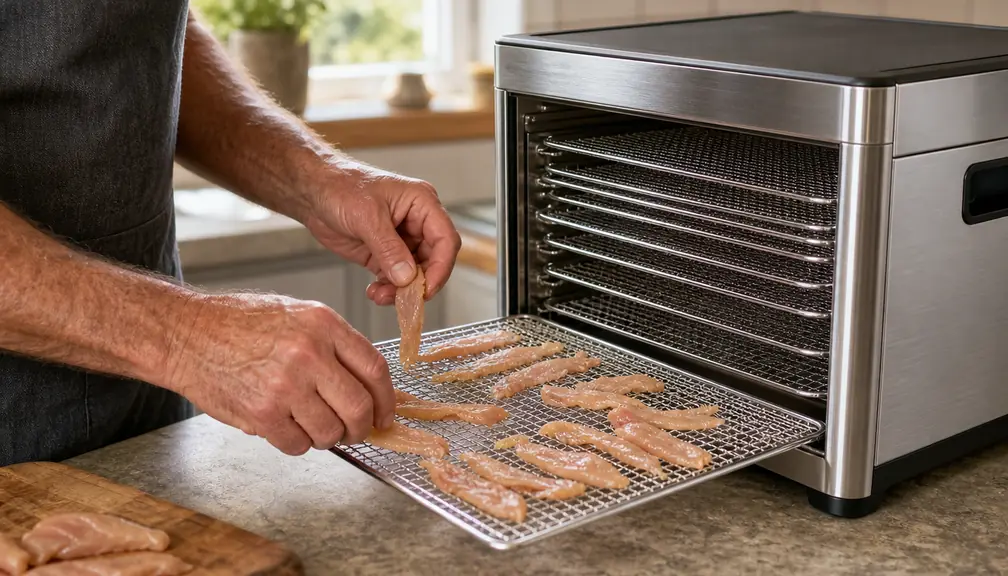
My first batch was chicken strips, and I was skeptical. I had used a round dehydrator years ago that dried unevenly and made me rotate trays every hour. The Cosori's rear-mounted fan meant I loaded six trays, and I did not touch them again until the strips were done. That first batch sold me on the design. I remember the date because I wrote it on the freezer bag: the second Sunday in March. I sliced two pounds of chicken breast into quarter-inch strips, laid them out with a little space between each piece, and set the temperature at 165 degrees. Five hours later the strips came out evenly dried, top to bottom, and Biscuit sat for them in a way he never sits for anything from a bag.
I should also say that the vet knows about the treats. When we agreed on the homemade plan, I told her exactly what I was making and how much. She gave me the green light on the chicken strips and asked me to keep sweet potato portions modest. She also reminded me that treats should stay a small part of his calories, which is why I portion everything. That conversation is the one I recommend to anyone before they start.
What the Specs Actually Tell You
The listing says six stainless steel trays with 6.5 square feet of drying space, and that number matters more than I expected. A single tray is fine for a snack. Six trays with 6.5 square feet means I can do a full week of treats in one afternoon, which is the difference between a routine and a project.
The temperature range is 95 to 165 degrees Fahrenheit. For dog treats, I live in the lower half of that range. Fish and chicken dry gently at the low end, while sweet potato slices need more heat to crisp. Having the full range available means one machine covers both. The first fish batch I ran at 95 degrees for close to nine hours, and it came out tender instead of brittle, which is what I wanted. The same machine handled a sweet potato batch at 135 degrees a week later. I would not have guessed one appliance could do both well.
It is a 600-watt machine with a rear-mounted drying fan, and the fan is the feature I would not give up. Even drying without rotating trays is the thing that makes a batch come out right. The brushless motor keeps the noise below 48 decibels, which is quieter than my refrigerator. I have run it overnight more than once and forgotten it was on.
The physical size is worth knowing before you order. It is 17.8 inches deep, 13.4 inches wide, and 12.4 inches tall, and it weighs 18.1 pounds. That is not a tiny appliance. It lives on my counter because I use it weekly, and it is heavy enough that I do not move it around for fun. The 2-year manufacturer warranty is a comfort, but the build feels solid enough that I have not needed it.
The listing also mentions a fruit roll sheet and a mesh sheet in the box. I use the fruit roll sheet for fruit leather and the mesh sheet for small pieces of fish that would slip through the tray gaps. Both are simple, and both made the six trays more useful than I expected.
What Nobody Tells You About Drying Dog Treats
First, drying takes hours, not minutes. A batch of chicken strips takes most of an afternoon. Sweet potato slices take longer. This is not a failure of the machine; it is the nature of dehydration. The honest version of this review is that you need to plan around the time, not against it.
Second, meat needs care. I only dry meat that I would eat myself, and I follow basic food safety the same way I did in the cafeteria. Lean meat dries better than fatty meat, because fat does not dehydrate the same way and can turn rancid in storage. I trim chicken before it goes in, and I store finished treats in the freezer or in small batches in the pantry.
Third, texture is a judgment call. Biscuit likes his treats with a little give, so I pull chicken strips while they are still slightly pliable. For crunchy sweet potato, I let them go longer. The temperature range and the trays give me room to experiment, but the first few batches were a learning curve. I wasted a few trays of chewy sweet potato that turned into leather. The batch that finally worked was cut on the thinnest setting of my mandoline, about an eighth of an inch, dried at 135 degrees for seven hours, and then left to rest on the counter for an hour before I bagged it. That resting step, letting the pieces equalize moisture, made the difference between crisp and chewy. It is the kind of detail that never shows up in a product listing, but it is the difference between treats that last and treats that soften in the jar.
Fourth, the kitchen smells like whatever you are drying. Chicken day means the whole kitchen smells like roast chicken. That is pleasant enough, but if you are sensitive to food smells, run it near an open window. Nobody told me that part.
Fifth, start with small batches while you learn. My first few trays were experiments, and I am glad I did not fill all six with expensive meat before I understood the drying times. Once you know how your kitchen, the humidity, and your slicer behave, you can load the whole machine with confidence.
Sixth, storage is the part nobody photographs. I keep soft chicken strips in a labeled container in the fridge for the next few days and freeze the rest in single-batch portions. The chest freezer in the garage holds a small stack of treat bags, each dated with the contents and the drying date.
Seventh, serving takes a little thought. I break treats into pieces that match Biscuit's size, which is important for a 28-pound dog. A chicken strip that looks reasonable to me is a whole meal to him, so I cut everything small. The dehydrator does the drying, but you still have to portion for your own dog.

The Honest Downsides
The biggest downside is the footprint. At 17.8 by 13.4 by 12.4 inches and 18.1 pounds, it is a permanent counter resident in my kitchen. If you have limited counter space, measure before you buy. I cleared a spot next to the toaster oven and it has lived there since.
The cleanup is real. Stainless steel trays are sturdy and food safe, but sticky sweet potato residue needs a soak. The mesh sheets that come with it, for smaller items, need gentle handling. I wash trays in the sink with hot water and a stiff brush, and I budget ten minutes for cleanup after each batch.
The noise, while quiet at below 48 decibels, is not zero. I can hear the fan hum from the next room, and the first time I ran it at night I checked on it twice before I trusted it. It is not loud enough to bother anyone, but it is not silent either.
And the honest truth is that a dehydrator does not save you time. It saves you money and control, but the work is still yours. You trim the meat, load the trays, check the progress, and store the results. If you want an appliance that does the thinking for you, this is not that.
The other thing nobody tells you: you will make batches that fail. Too thick, too wet, too long, too hot. The first time I tried banana slices, they stuck to the tray and came off in pieces. That is normal. The machine is not broken. You are just learning the rhythm. My first fish batch went in too thick and came out chewy in the middle, and I fed the salvageable pieces to the compost bin. A month later I sliced the fish thinner, dried it at the low end of the range, and it came out perfect. The machine did not change. I did.
One more honest note: this is not a machine you can ignore for eight hours and come back to a finished product. Drying times vary with thickness, humidity, and how full the trays are. I check my batches every couple of hours, and I pull trays as they finish. That is normal for any dehydrator, but it is worth knowing before you buy.
What I Liked
- Six stainless steel trays with 6.5 square feet of drying space handle a week of treats in one batch
- Rear-mounted drying fan gives even results without rotating trays
- Brushless motor keeps noise below 48 decibels, quiet enough to run overnight
- Temperature range from 95 to 165 F covers gentle fish treats and crisp sweet potato
- Solid 18.1-pound build with a 2-year manufacturer warranty
Where It Falls Short
- Large counter footprint at 17.8 x 13.4 x 12.4 inches
- Heavy enough that you will not want to move it around
- Drying takes hours, and cleanup takes planning
- Sticky trays need a soak; the mesh sheets need gentle handling
- It is a tool, not a cure: you still have to check your dog's diet with a vet
Six trays, 6.5 square feet of drying space, and a fan that dries evenly without rotating a single tray: the Cosori does the boring work quietly, which is exactly what a Sunday-afternoon routine needs.
Who This Is For
This dehydrator is for you if you already cook for your dog and want treats that match. It is for the person who reads a kibble label, does not like it, and wants to know exactly what is in the bag. It is for the owner of a picky eater like Biscuit, who walks away from store-bought treats but will sit for a homemade chicken strip.
It is also for batch cooks. If you like the idea of one Sunday afternoon of prep and a freezer full of portions, the six trays will reward you. And it is for anyone who wants to control salt and additives in their dog's treats without spending a small fortune on boutique jerky.
If you have a dog who turns up their nose at store-bought treats, this is worth a try. Biscuit has walked away from treats that cost more than my own snacks, but he sits for the chicken strips I make at home. I cannot promise your dog will do the same, but the control over ingredients is the real draw.
If you are the kind of cook who already makes your own broth or bakes your own bread, you will take to a dehydrator quickly. It is the same mindset: a little patience, a little planning, and a lot of control over what goes into the food. That mindset is the real requirement.
Who Should Skip It
Skip it if you are hoping the dehydrator will fix a health problem. It will not. Homemade treats are lovely, but they are not medicine, and any change to your dog's diet should be checked with your vet first. If you are looking for a cure, buy a dehydrator after the conversation, not before.
Skip it if you will use it once a month. This is a weekly appliance in my kitchen, and it earns its counter space because I use it every Sunday. If you are not sure you will batch-cook, start with a friend's dehydrator or a cheaper model and see if the routine sticks. And skip it if your kitchen has no room for a 17.8-inch-deep appliance, because the honest truth is that you will not haul an 18.1-pound machine out of a cupboard every week.
And skip it if you are buying this for a dog who is already on a carefully balanced veterinary diet and your vet has not signed off on extra treats. Extra calories are still calories, and a 28-pound beagle like Biscuit does not need many. The dehydrator is a tool for cooks who want control, not a reason to add treats your dog does not need.
The one I kept on my counter
After months of Sunday batches, the Cosori is the dehydrator I reach for without thinking. If it fits your kitchen and your routine, it will earn its spot. Check today's price on Amazon to see the current listing details.
Amazon Check Today's Price on Amazon →