
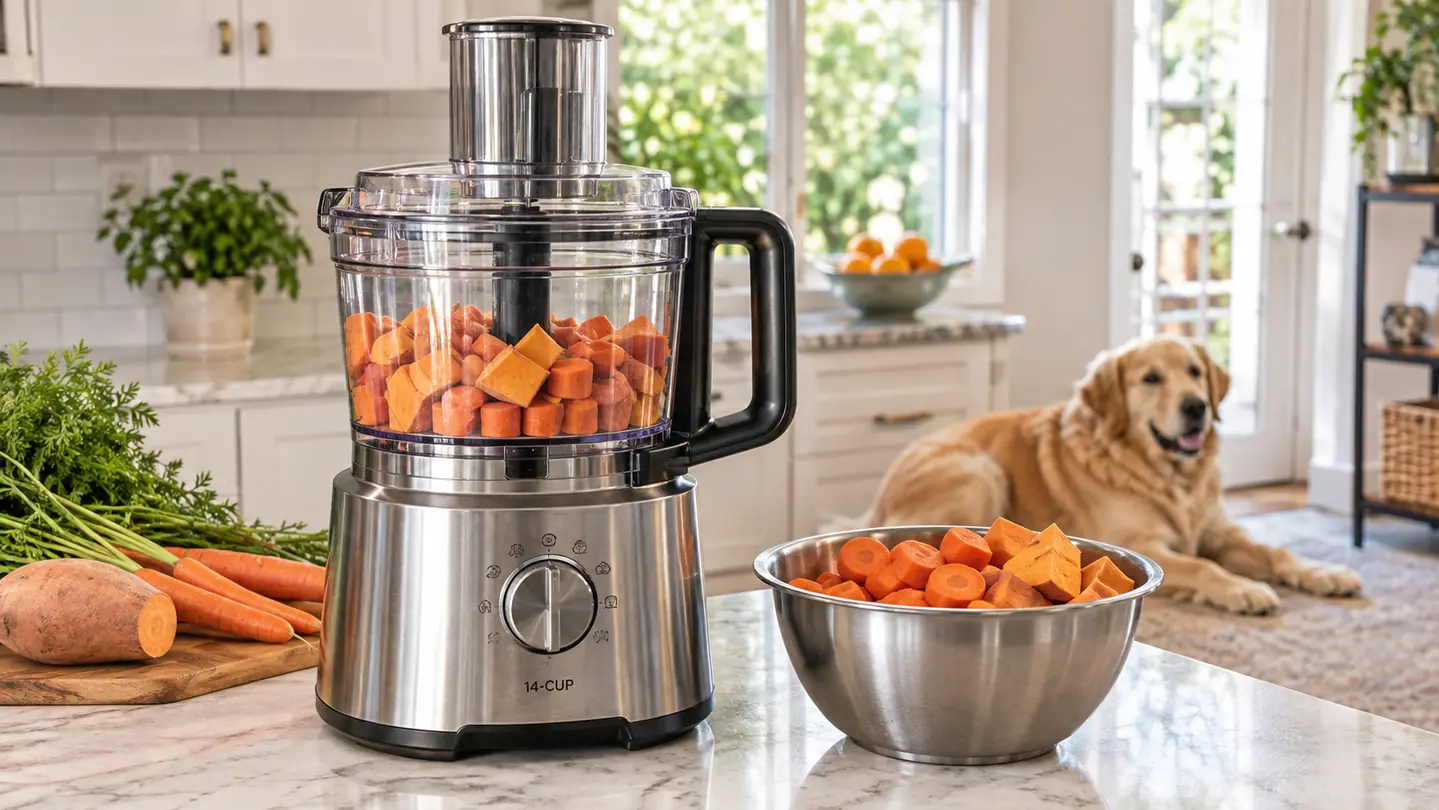
If you batch-cook for a dog with a sensitive stomach, you eventually run into the same question I did: do I need a food processor, or will my blender do the same job? I stood in my Madison kitchen last winter with a counter full of sweet potato, carrots, and chicken, and I honestly was not sure. Both machines sat on my counter for three weeks while I kept notes on time, texture, and cleanup. So I tested them side by side, for the way I actually cook for Biscuit, my 9-year-old beagle mix. The short answer: a blender purees, but a food processor cooks. If you want chunky, textured, batch-sized prep you can freeze and reheat, the Cuisinart 14-cup food processor is the better tool.
That sounds like a small distinction until you have stood over a blender at four thirty on a Sunday afternoon with a sink full of dishes. My routine is the same every week. I cook for Biscuit on Sunday afternoons, make a week of portions, and freeze them in the chest freezer in the garage. He is 28 pounds of beagle mix with a stomach that objects to most kibble, and he will walk away from a bowl he does not like. The first time I tried to make his food in my blender, I added a little water to help the blades catch, ran it for thirty seconds, and opened the lid to find a smoothie. Biscuit sniffed it, sat down, and looked at me. He ate it eventually, but only after I stirred in some shredded chicken. That was the day I started comparing the two machines seriously, and the comparison changed how I cook. I will walk you through what I found, including the places where the blender is the better answer, because the right tool depends on the food you actually make.
| Cuisinart 14-Cup Food Processor | A Standard Blender | |
|---|---|---|
| Best at | Chopping, mincing, shredding, slicing, pureeing, and kneading dough | Liquids, smoothies, soups, and thin purees |
| Bowl capacity | 14 cups, with an extra-large feed tube for whole chunks | Usually 5 to 8 cups, and you cannot fill it to the rim with solids |
| Texture control | Pulse for coarse chunks or run for a smooth puree, you choose | Hard to stop at chunky, everything ends up drinkably smooth |
| Batch cooking | Processes a week of dog food portions in one bowl | Needs several small batches and constant scraping |
| Dough and thick mixes | Kneads dough and powers through thick mixtures | Not built for stiff dough, blades stall easily |
| Cleaning | Dishwasher-safe bowl, lid, and discs | Jar is easy to rinse, but the blade base and lid seals need care |
| Counter space | Takes up real estate, about 11 inches deep and 14.8 inches tall | Tall and narrow, easier to tuck under a cabinet |
| Price | One larger purchase that replaces several tools | Often cheaper, and you may already own one |
Where the Cuisinart Wins
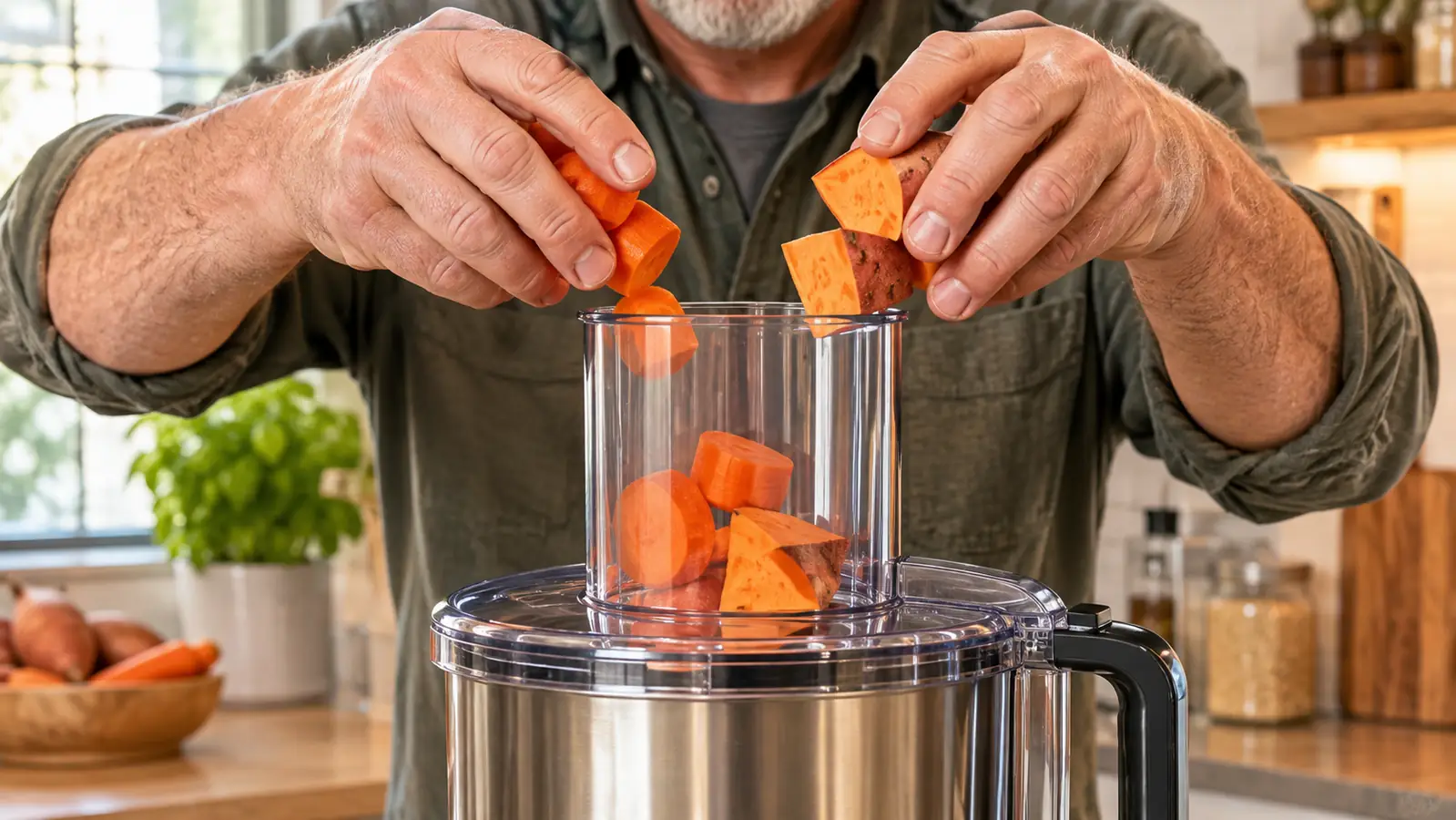
The Cuisinart wins on texture, and texture is the whole point when you cook for a picky dog. Biscuit walks away from kibble, but he also walks away from food that has been buzzed into baby mush. With the Cuisinart, I can pulse sweet potato into small chunks, mince carrots finely enough to hide in ground chicken, and shred greens without turning them to slime. One Sunday in January, I put an entire sweet potato through the feed tube and pulsed it four times; the pieces came out about the size of peas, which is exactly the texture Biscuit will eat without picking around it. The 720-watt motor and the 14-cup bowl handle a full batch at once, which matters when you cook on Sunday afternoon and freeze a week of portions. I keep a spiral notebook on the counter with a column for texture, and it tells me the most. When I pulse sweet potato six times instead of four, the pieces come out closer to rice than to peas, and Biscuit cleans the bowl either way. Knowing I can repeat that result every Sunday is why I stopped reaching for the blender.
It also does jobs a blender simply cannot. The extra-large feed tube means I drop in whole chunks instead of precutting everything into tiny cubes. The standard slicing disc gives me even slices for treats, the medium shredding disc makes quick work of zucchini, and the chopping blade minces meat and vegetables in seconds. One quick pulse breaks down green beans without turning them into a paste. When I want a smooth puree for a dog who needs an easier-to-digest meal, it does that too. One machine, every texture I need, and the parts go in the dishwasher. The Sunday I tested it against my blender, I made the same recipe twice: a pound of ground turkey, two carrots, half a sweet potato, and a handful of green beans. The food processor had everything minced and mixed in under two minutes. The blender needed four batches, a cup of water, and a spatula.
The 14-cup bowl matters more than I expected. A standard blender jar holds five or six cups, and you cannot fill it to the top with solid food because the blades need room and liquid to move. The Cuisinart bowl holds a full batch of Biscuit's week: about two pounds of protein, three cups of chopped vegetables, and a cup of cooked starch, all at once. I weigh the portions into freezer containers right from the bowl, and the whole session, from chopping to containers in the chest freezer, takes about forty minutes. With the blender, the same batch took more than an hour and left me with three extra bowls to wash. The Saturday before a snowstorm in February, I made a double batch because I did not want to cook while the roads were bad. The 14-cup bowl took the whole thing, two pounds of turkey and four cups of vegetables, and I filled sixteen containers in one session. That is the day I stopped thinking of the blender as a backup.
The other thing I did not expect is how much the Cuisinart helps with the rest of the week. I use the 14-cup bowl to mix a double batch of pumpkin and oat treats, and the kneading function works the dough without me getting flour on every counter in the kitchen. The treats come out more even too, because the slicing disc cuts to a consistent thickness, so they bake at the same rate. The machine is 18 pounds, so it stays put on the counter while I work, and the corded motor means I never wait on a battery or remember to charge anything. When I am done, the bowl, the lid, the feed tube, and both discs go straight into the dishwasher. Cleanup takes about as long as it takes to feed Biscuit his dinner. Last month I made three dozen treats for the neighbor's dog who was recovering from surgery, and the slicing disc made the whole batch in about ten minutes. I wrapped them in a tin with a note that the recipe came from our vet's handout on gentle treats. Biscuit was not impressed that I gave some away, but the neighbor's dog ate every one.
The controls are simple in the best way. There is an on button and an off/pulse button, and that is all. The pulse is the feature I use most, because a quick pulse gives me coarse chunks and a longer run gives me a puree, all from the same blade. When Biscuit's stomach was off last spring and the vet suggested softer food for a few days, I ran the same batch longer and got a smooth puree he could handle. One machine gave me both textures from the same ingredients, which is something no blender I have owned could do.
Where a Blender Wins
I am not going to pretend the blender has no place in this kitchen. It wins on liquids, and it wins on footprint. If your dog's meal plan is mostly broths, thin purees, or foods you want completely smooth, a blender does that faster and with less cleanup. My blender also tucks under the upper cabinet, while the Cuisinart, about 11 inches deep and 14.8 inches tall, needs a permanent spot on the counter or a deep cabinet. For a small kitchen, that matters. My blender is a decade old and still going, and on the days I make bone broth, it earns its shelf space. Once a month I make bone broth in a stockpot with the leftover chicken carcass, and the blender smooths out the last bits before I pour it into jars. It does that in one pass and rinses clean in seconds. For a thin liquid, I would be scraping the sides of a 14-cup bowl to rescue a cup and a half of broth, which is a silly job for a big machine.
A blender is also the tool you likely already own, which means the honest answer is that you may not need to buy anything at all for a liquid-only diet. But here is what I found when I tried to make Biscuit's actual meals in the blender: I had to work in small batches, add liquid to keep the blades moving, and scrape the sides constantly. The extra water also made the portions thinner than I wanted, so I had to cook it down on the stove, which added another pot to the wash. The blender also needed the food to be cooked first, while the food processor handles raw vegetables and turns them into the pieces I want. The result was a puree with no texture, and texture is what keeps a picky eater interested. For chunky, varied, batch-sized prep, the blender lost the job.
I will give you the exact case where I still reach for the blender. When Biscuit came home from a dental cleaning last fall, the vet said to offer soft food for a couple of days. I cooked a chicken breast, put it in the blender with some of the cooking water and a little cooked sweet potato, and had a thin, smooth meal he could lap up without chewing. It took ninety seconds and the jar rinsed clean in one pass. For that job, the blender was the right tool, and I would not trade it away. So when I say the food processor is the better tool for batch cooking, I mean for the chunky, varied meals Biscuit eats most days. The blender stays on the shelf for the days he needs something gentler.
Batch-Cook a Week of Dog Food in One Bowl
The Cuisinart 14-cup food processor chops, slices, shreds, and purees, so you can prep a full week of homemade meals in one Sunday session.
Amazon Check Today's Price on Amazon →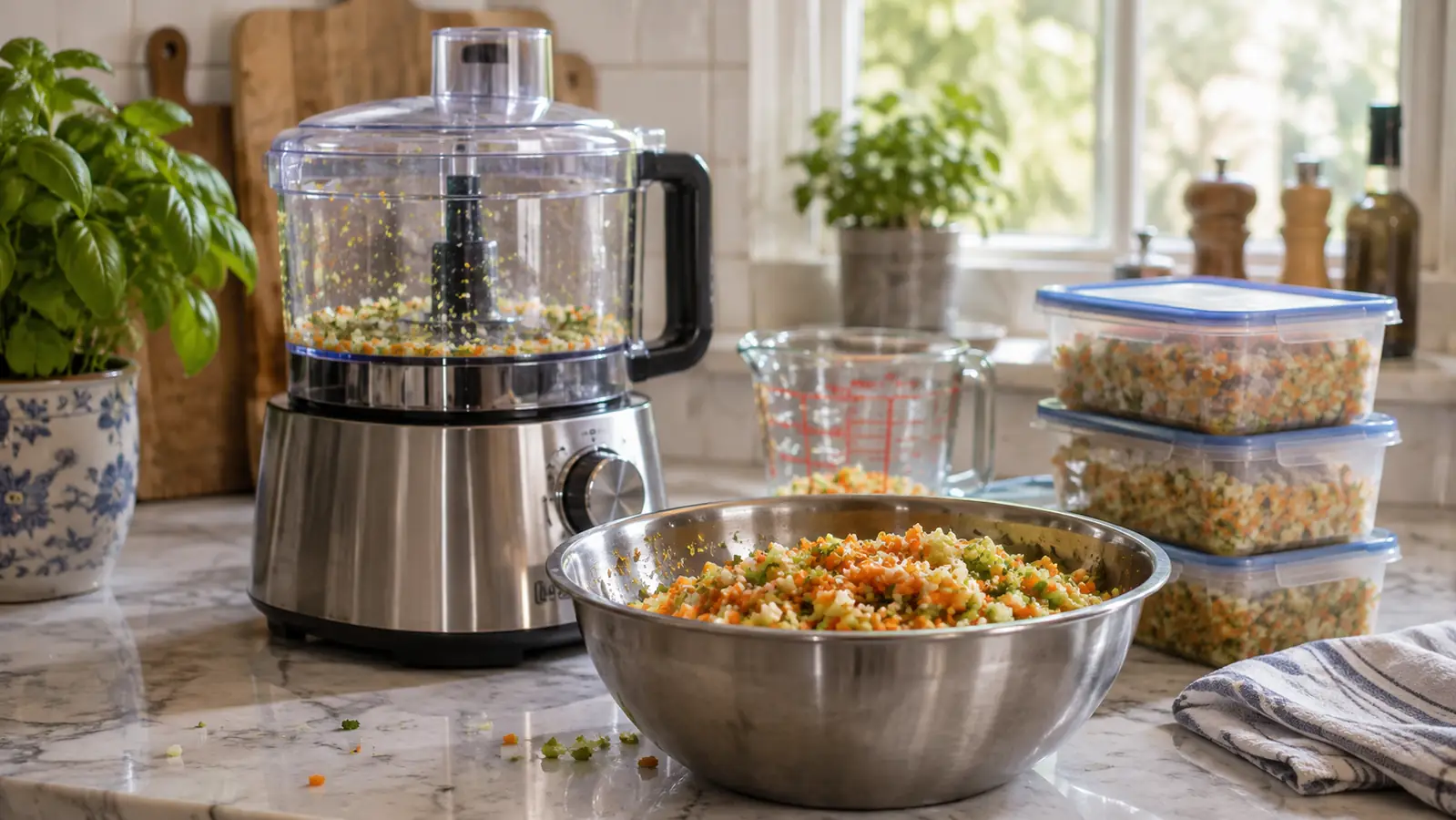
Who Should Buy Which
Buy the Cuisinart 14-cup food processor if you batch-cook for your dog, if you want control over texture, or if you prep vegetables for your own cooking too. It earns its counter space every Sunday in my kitchen. Buy or keep a blender if your dog eats mostly smooth purees, broths, or liquids, or if you simply do not have room for a second large appliance. And if you are unsure, borrow a food processor for one batch before you decide. One Sunday of prepping a week of portions will tell you which tool you reach for. If you are cooking for a senior dog or a dog with dental issues, talk to your vet about texture; some dogs do better with soft food, and that changes the calculation.
My neighbor down the street cooks for her cat and she swears by her blender, because her cat needs everything pureed to a thin, even consistency. That is a real use case, and I am glad she found the tool that works for her. The question is not which machine is better in the abstract. It is which machine matches the food you actually make. If your dog eats a mix of textures, or if you want to move from canned food to food you cooked yourself, the food processor gives you room to grow. You can start with coarse chops and move to finer textures as you learn what your dog likes. The food processor is the more flexible of the two, but flexible only helps if you actually use it.
Whichever way you go, please run the actual recipe past your vet before you switch your dog's diet. I cook for Biscuit because his sensitive stomach does better on homemade food, but I worked out the portions and the ingredients with our vet first. We landed on a ratio of protein, vegetables, and a little starch that fits his size, his age, and his history of upset stomachs, and I have not changed it without asking. Your vet knows your dog's health history, and a diet change is a medical decision, not just a kitchen one. A food processor makes the cooking easier. It does not replace veterinary advice.
The Tool That Made Sunday Prep Take Half the Time
Chop, mince, slice, shred, and puree a full week of homemade dog food in one 14-cup bowl, then toss the parts in the dishwasher.
Amazon Check Today's Price on Amazon →