
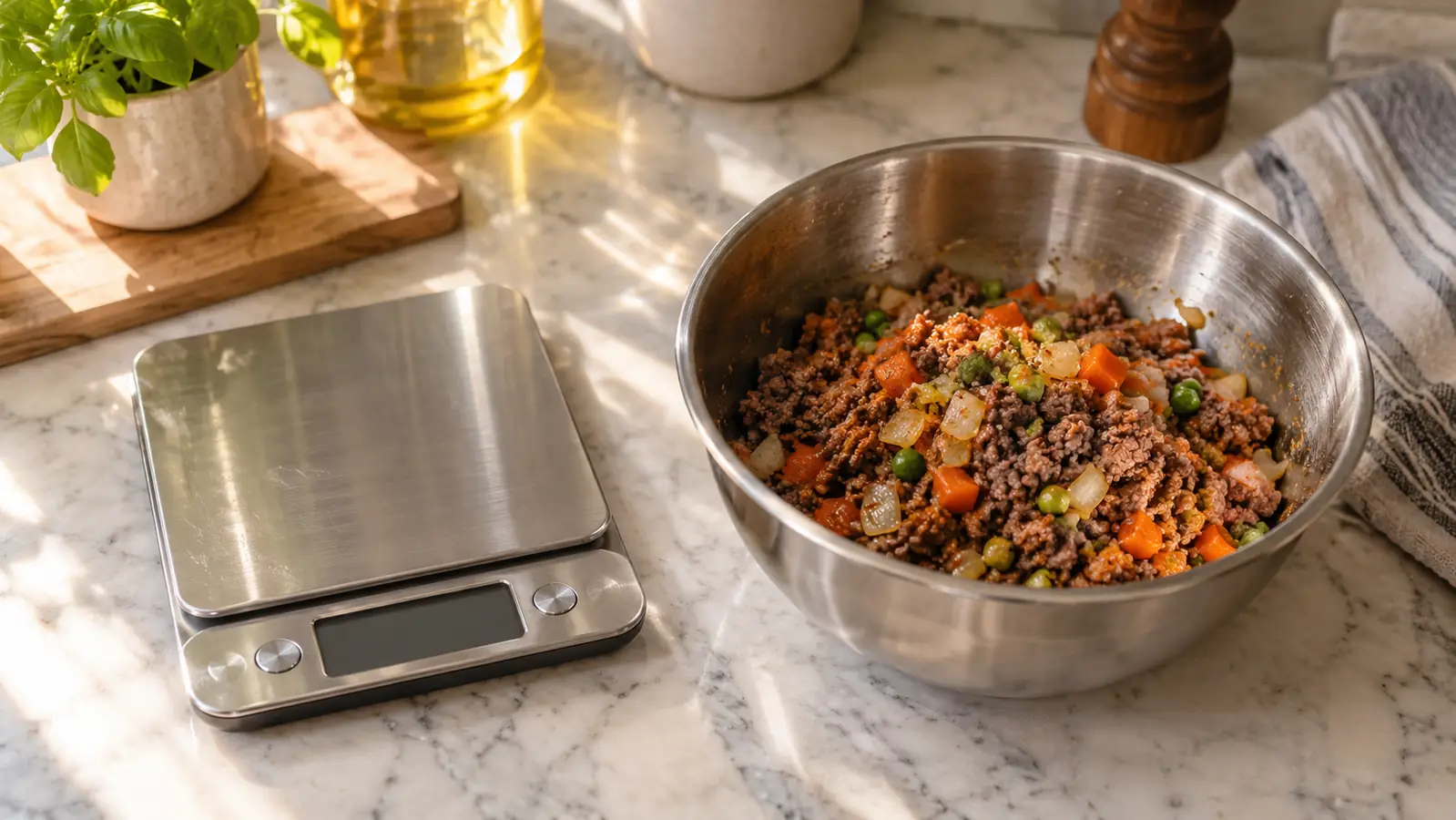
I started batch-cooking for Biscuit three years ago, after a run of upset stomachs that left me second-guessing every bag of kibble I bought. The cooking part came easily. I was a cafeteria manager for 30 years; I can stretch a pot of stew further than most people can stretch a dollar. What humbled me was portioning. I would scoop what looked like a reasonable amount into his bowl, freeze the rest in vague lumps, and then spend the week worrying that some bags were too big and some were too small. A 28-pound beagle mix with a sensitive stomach does not forgive guesswork. So I bought a kitchen scale, and it changed the whole routine.
The scale I landed on is the Etekcity 22lb Food Kitchen Scale. It weighs up to 22 pounds in 1-gram increments, which matters when you are dividing a 10-pound batch into 28 exact portions. It is also waterproof to IPX6, so the inevitable splash of broth and the quick rinse afterward are not a crisis. If you cook any of your dog's food at home, weighing portions by grams is the difference between a consistent diet and a lucky guess. Here is the exact method I use every Sunday.
Weigh your batch, not your worries
The Etekcity 22lb Food Kitchen Scale handles a full pot of homemade dog food and measures down to 1 gram, so every portion comes out the same. It is the tool I reach for every Sunday before the freezer bags come out.
Amazon Check Today's Price on Amazon →Step 1: Decide the portion size with your vet before you cook
The scale is not the starting point. The conversation with your vet is. Every dog is different, and a homemade diet needs to be checked against your dog's weight, age, activity level, and health. When Biscuit's vet and I worked out his portions, we talked in grams per meal, not scoops or cups. That number, written on a sticky note on the fridge, is what makes the whole weighing system work. Without a target number, the scale just gives you a precise measurement of a guess. I learned this the hard way. The first time I asked my vet to look at my recipe, I brought a printed page and asked if the portions looked reasonable. She smiled, nodded, and asked me how many grams were in a serving. I had no answer, because I had been feeding by volume, not by weight. We spent the next ten minutes doing the math together, and the gram target she wrote down is still on my fridge today. That appointment took twenty minutes and happened during his regular checkup. It was the highest-value twenty minutes of the whole process.
Ask your vet for a daily total in grams, then divide it by how many meals your dog eats. Biscuit eats two meals a day, so his weekly batch gets divided into 14 portions. Write the per-meal gram target down. You will need it in Step 3, and you will need it again every time you change the recipe.
If your vet is not comfortable giving you a gram target, ask for a referral to a veterinary nutritionist. This step is worth the awkward phone call. The scale can only measure what the plan tells it to measure.
Step 2: Cook the batch, then weigh the whole thing warm
I cook Biscuit's food on Sunday afternoons: a protein, a couple of vegetables, sometimes a grain if his stomach is tolerating it. When the pot is done, I let it cool just enough to handle, then I put a large bowl on the Etekcity scale and press the tare button. The tare function zeroes out the bowl, so I get the weight of the food alone. This is where the 22-pound capacity earns its keep. A full batch of food plus a heavy stainless bowl can easily push past what a tiny jewelry scale can handle, but the Etekcity reads up to 22 pounds without blinking. I weigh the whole batch because I skipped it once and paid for it. One Sunday in February I trusted my eye and split the pot into what I thought were equal halves. By Thursday the difference was obvious: one portion was clearly bigger than the other, and Biscuit walked away from the smaller meal. Out of curiosity I weighed the leftovers. There was a 60-gram gap between the two halves. That was the last batch I portioned by eye, and the scale has weighed every batch since.
Write down the total weight in grams. Say the batch comes out to 4,536 grams. If my vet-approved daily total is 650 grams, that is 6.98 days of food, so I round to 7 days and freeze 14 portions of 324 grams each. The math is simple, but only because the scale gives me an exact starting number instead of a full-pot estimate.
Weigh the food warm, not after it has sat overnight. Cooked food loses moisture as it cools and sits, so the weight you measure right after cooking is the weight your dog is actually getting when you portion and freeze it. Weighing warm also means the food is still soft enough to scoop evenly.
Step 3: Portion by grams, not by scoop size
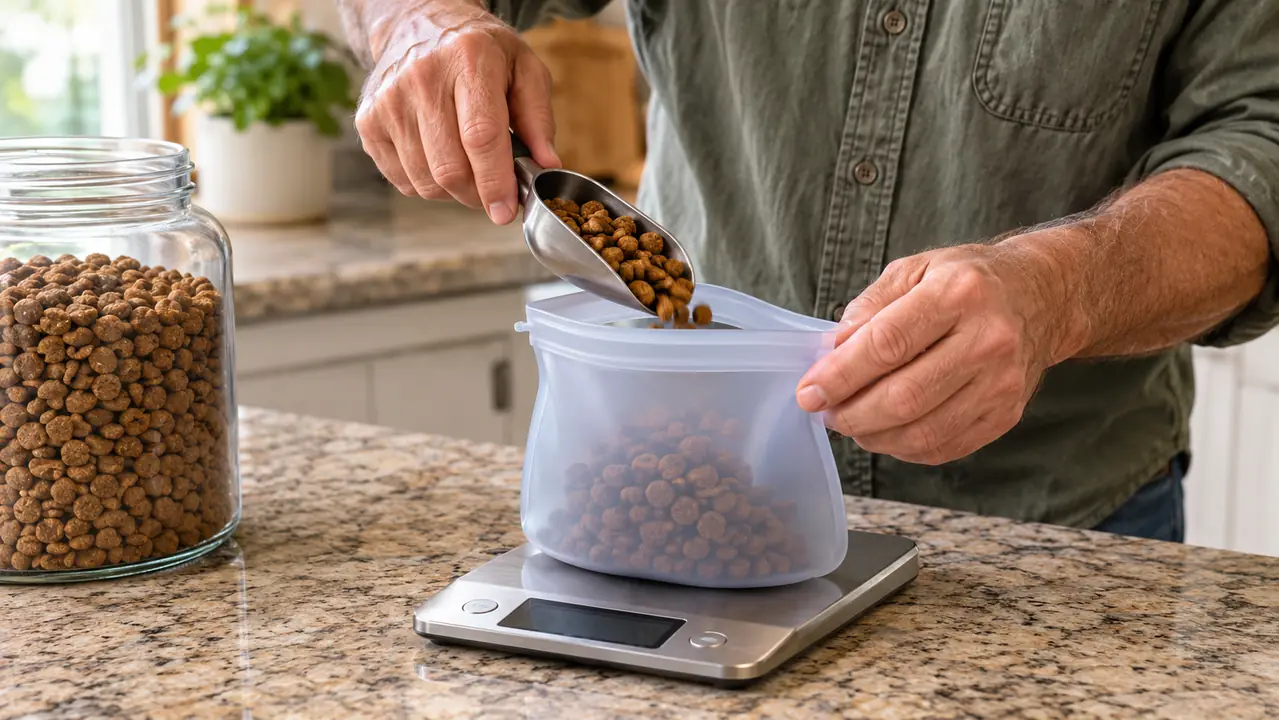
This is the step that fixed my whole routine. Instead of eyeballing scoopfuls, I put a portion bag on the scale, tare it, and scoop food in until the display reads my target number. For Biscuit, that is 324 grams per meal. The Etekcity measures in 1-gram increments, so I can be exact without hovering over the bowl for ten minutes. When the display hits 324, I stop. That bag is done. Before the scale, I portioned with a 1-cup scoop, the same one I used for pancake batter, and it failed in a quiet way. Every scoop packed differently. A loose scoop of the vegetable-heavy batch weighed less than a packed scoop of the meat-heavy batch, so some meals came out light and some came out heavy. Biscuit's weight drifted up two pounds over the winter before I caught it, and the vet was the one who noticed. Two pounds on a 28-pound dog is a lot, and it was a reminder that volume is a hope, not a measurement.
The scale switches between grams, ounces, pounds and ounces, milliliters, and fluid ounces, which is handy when a recipe calls for a liquid like broth or water. For dog food portions, grams are the unit to use because they are small enough to be precise. A 5-gram difference is the difference between a level portion and a slightly generous one, and for a sensitive stomach, that consistency matters.
If you are portioning for a dog who eats more than one meal a day, weigh all of the portions for the week in one sitting. The rhythm of tare, scoop, stop, bag, repeat takes about 20 minutes for a full week of Biscuit's food, and it means I never have to guess midweek about whether a bag is the right size.
Step 4: Freeze flat, label everything, and weigh once more before serving
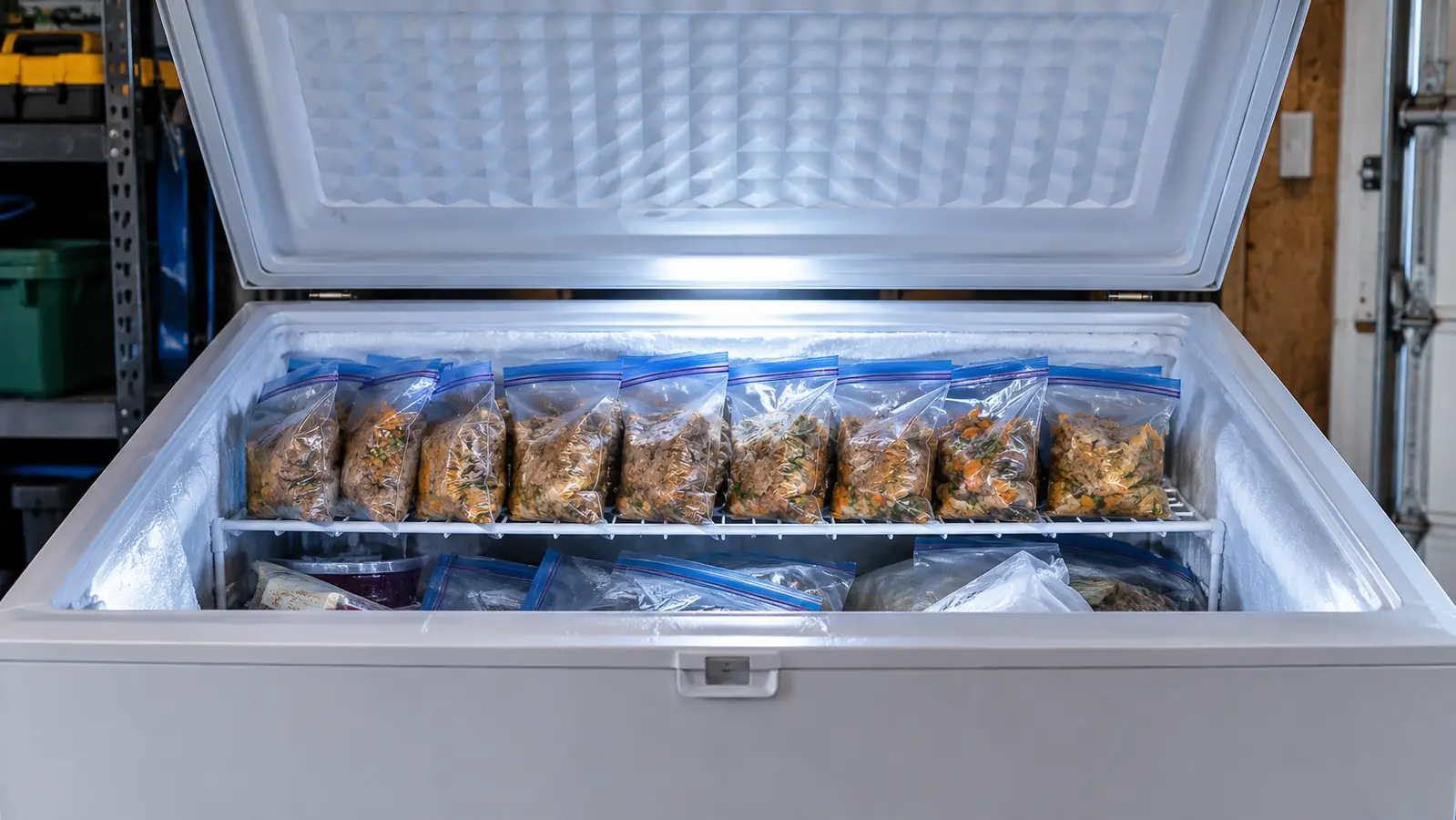
Once a bag hits its target weight, I press out the air, lay it flat on the freezer shelf, and label it with the date and the gram weight. Freezing flat does two things: it thaws faster, and it stacks neatly in the chest freezer in my garage. The label matters more than you think. Three weeks from now, you will not remember which bag is the chicken batch and which is the beef batch, and you will not remember which one was portioned on a day you were rushing. I learned this last spring, when I froze a chicken batch on Sunday and a beef batch the following Sunday and forgot to label the second one. Three weeks later I thawed what I thought was chicken and served beef to a dog who had been doing fine on chicken. He was fine, but I was not, and every bag since has had the date and gram weight written on it before it goes in the freezer. Now the label goes on before the bag goes in, while the date is still obvious, not after I have already forgotten it.
On serving day, I pull one bag from the freezer, let it thaw in the fridge, and give it a final weigh. Frozen food sometimes loses a little moisture or picks up a little frost, so a quick check on the scale tells me the portion is still within a few grams of the target. If it is off by more than 10 grams, I add or remove a spoonful before it goes in the bowl. This final check is what makes the whole system feel trustworthy.
The Etekcity's display is backlit, which helps in my dimly lit garage freezer corner, and it auto-shuts off to save the rechargeable battery. The battery charges over USB-C, so I never have to buy those little coin cells again. It is a small thing, but it means the scale is always ready when I am.
Step 5: Clean the scale the way the specs say, and it will last
The Etekcity is rated IPX6 waterproof, which means it can handle a rinse under the tap and the occasional splash of broth. After every batch, I wipe the stainless steel surface with a damp cloth and dry it. About once a month, I rinse it under gently running water and let it air dry completely. I do not submerge it, and I do not put it in the dishwasher. The waterproof rating is for splashes and rinses, not for a soak.
The scale weighs as little as 2 grams and as much as 22 pounds, and the readout accuracy is 2.86 grams, so it is precise enough for both a single treat and a full batch. Keeping the surface clean matters for accuracy too. A crust of dried food on the platform can throw off a reading by a gram or two, and when you are portioning for a sensitive stomach, a gram or two is exactly what you are trying to control. I check the reading against a known weight now and then. A bag of flour from the pantry weighs what it says on the label, and when the scale agrees with it, I trust the numbers for Biscuit's dinner.
I keep the USB-C cable in the same drawer as the freezer bags, so when the low battery warning shows up, I can plug it in overnight and it is ready for the next Sunday batch. The rechargeable battery is one of the reasons I chose this scale over the ones that eat button batteries.
What Else Helps
A scale is the centerpiece, but a few other tools make the Sunday routine smoother. I use a wide, shallow scoop for filling bags, because it moves food quickly without packing it down. Reusable silicone portion bags or small freezer bags with a label marker are worth the small cost. A digital kitchen timer reminds me when the batch has cooled enough to handle. And a permanent marker that writes on freezer bags saves me from squinting at smudged labels in January. None of these are fancy, but together they turn a 45-minute chore into a calm 20-minute one.
I also keep a small notebook in the kitchen with the recipe, the vet-approved gram target, and the date of each batch. When Biscuit's weight changes, or when I swap a protein, I write down the new number. Over time, that notebook has become the most useful thing in my dog food routine after the scale itself. And if you are just starting out, I will say what I say to every friend who asks: check the plan with your vet before you cook a single batch. The scale makes you precise. The vet makes you safe.
The scale did not make me a better cook. It made me a consistent one, and consistency is what a sensitive stomach needs most.
Make every batch the same as the last one
The Etekcity 22lb Food Kitchen Scale weighs a full pot of homemade food and measures down to 1 gram, so your vet-approved portions come out identical every single week. That is the whole job, and it does it well.
Amazon Check Today's Price on Amazon →