
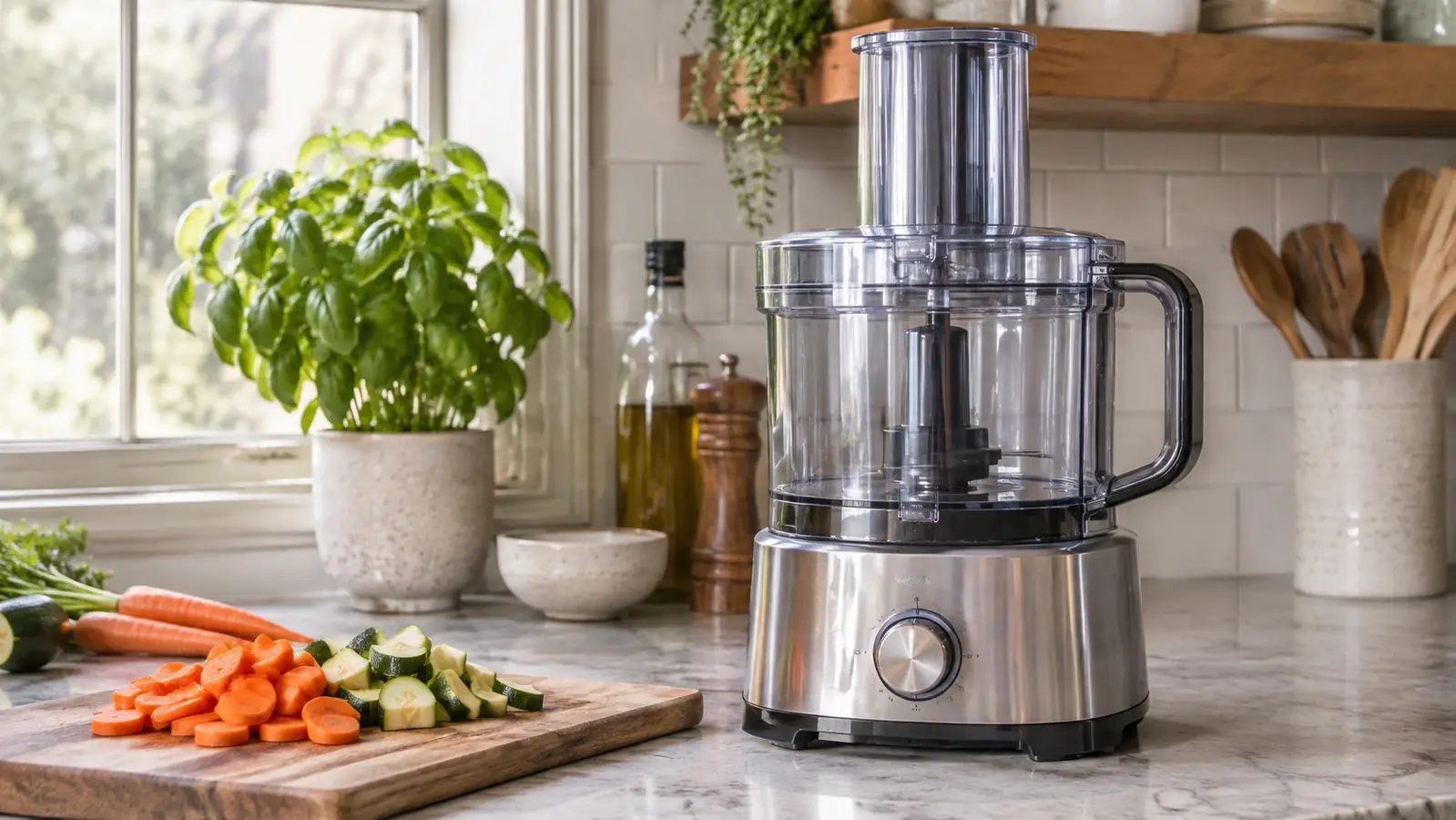
I'll be honest with you. I bought the Cuisinart 14-cup food processor for the same reason most people do: I was tired of crying over onions, tired of shredding cheese by hand, and tired of spending forty-five minutes chopping vegetables for a single meal. That was eighteen months ago. The honeymoon is over. The bowl has been through the dishwasher more times than I can count, the blade has nicked my finger once, and I still reach for this machine every single Sunday when I batch-cook for Biscuit. Here is what nobody tells you before you buy one.
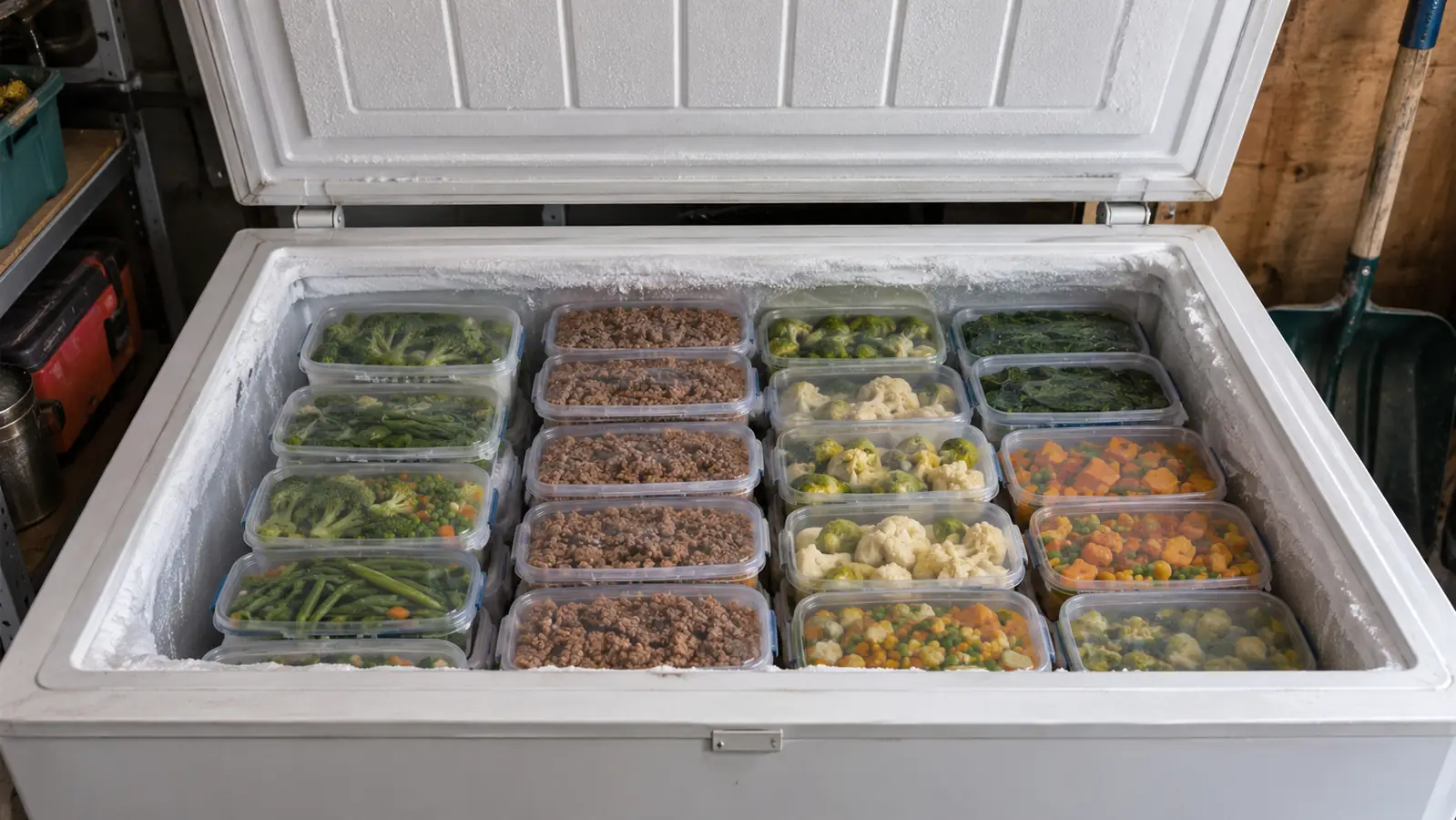
Biscuit is a 9-year-old beagle mix, about 28 pounds, with a sensitive stomach and a habit of walking away from kibble. After a run of upset stomachs, our vet agreed that a gently cooked homemade diet was worth trying, as long as we balanced it carefully and checked in regularly. That decision turned my ordinary kitchen into a small batch kitchen, and it is the reason this food processor earns its spot on the counter instead of living in a cupboard. The machine did not change my life. It changed my Sunday afternoons, which, if you batch-cook for a dog, is basically the same thing.
The Quick Verdict
A big, capable workhorse that makes weekly batch cooking genuinely easier. It has real limitations, and most of them are about size and cleanup, not performance.
Amazon Check Today's Price →The machine I still reach for every Sunday
Eighteen months in, the Cuisinart 14-cup food processor is still the first thing I set on the counter when I cook for Biscuit. If you are tired of hand-chopping a week of vegetables, this is the tool that fixes it.
Amazon Check Today's Price on Amazon →How I've Used It
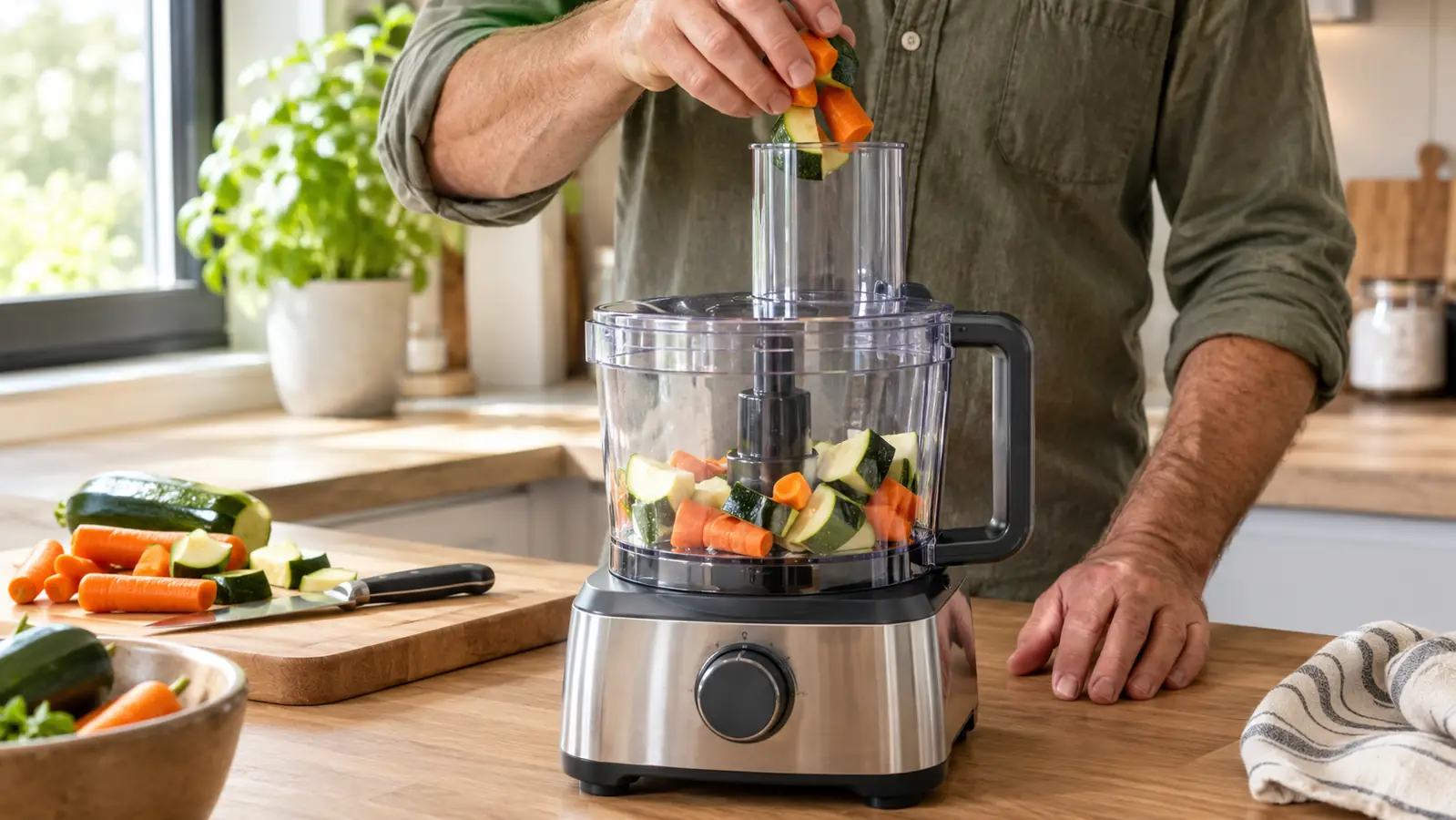
Every Sunday afternoon, I cook a week of Biscuit's food. That means a protein, usually ground turkey or chicken, plus a pile of vegetables that need to be small enough to mix evenly through the meat. Before the Cuisinart, that was forty-five minutes of chopping carrots, zucchini, sweet potato, and green beans by hand, with a numb wrist and a cutting board that looked like a crime scene. Now the vegetables go through the feed tube in chunks and come out uniformly diced in seconds. I am not exaggerating when I say the machine saves me half an hour of actual work every single week.
The 720-watt motor handles a full 14-cup bowl of dense sweet potato without slowing down, and the extra-large feed tube means I can drop in a whole tomato or a quartered onion without pre-chopping it into matchsticks. The "on" and "off/pulse" buttons are simple enough that I never have to think about them, which is exactly what I want at 4 p.m. on a Sunday when the ground turkey is already browning and Biscuit is doing his little dance by the stove.
I have also used it for the parts of my own cooking that I used to avoid: pie dough, pesto, coleslaw, and a truly alarming amount of shredded cheese. The standard slicing disc (4mm) and medium shredding disc that come with it are the ones I use most, and both are dishwasher safe, which matters more than you think after a year of weekly use. When a tool makes the boring parts of cooking faster, you cook more, and you cook better. That has been the quiet surprise of owning this machine.
What Nobody Tells You Before You Buy
The first thing nobody tells you is that this machine is heavy. Eighteen pounds. It is not a gadget you tuck into a drawer; it is an appliance that needs a permanent home on your counter or a very sturdy shelf. I keep mine on the counter because I would not actually pull it out of a cupboard every Sunday, and I think that is the honest test of whether a food processor gets used or becomes a dust collector. If you have limited counter space, measure the footprint before you buy. This is an 11 by 7.9 inch base, and it needs room to breathe.
The second thing is the cleanup. The bowl, lid, feed tube, and discs are dishwasher safe, and that is a genuine advantage. But the blade is sharp in a way that is easy to forget, and the lid has crevices where sweet potato puree likes to hide. If you rinse the parts right after use instead of letting them sit, cleanup is about five minutes. If you let them sit, you will be soaking things tomorrow and possibly scrubbing the feed tube with a bottle brush. I have done both, and I strongly recommend the first option.
The third thing is the noise. It is not quiet. It is a loud, mechanical whir that will make your dog leave the room, and if you are batch cooking on a Sunday morning while someone else sleeps, you will hear about it. None of this is a reason to skip the Cuisinart. It is just the reality of owning a machine with this much power. You are trading quiet for speed, and for my money, that is a fair trade.
The fourth thing is the learning curve, and it is smaller than you think. The manual control means you are in charge: hold pulse for a few seconds, check the texture, pulse again. I ruined exactly one batch of carrots by letting the machine run too long, and after that I understood the rhythm. You are not a passenger with this machine. You are the operator, and that is a good thing when you are cooking for a dog with a sensitive stomach.
The honest test of a food processor is whether it still earns its counter space a year later. Eighteen months in, mine does.
The Parts I Use Every Week
The 14-cup bowl is the star. It is genuinely large, large enough to hold a full batch of Biscuit's vegetables in one go, and large enough that I rarely have to work in batches for my own cooking either. The chopping blade that comes with it is the one I use for 90% of the batch cooking: drop in the vegetables, pulse a few times, and they come out the right size for a 28-pound dog. Not too fine, not too chunky, just right for mixing through ground turkey.
The standard slicing disc (4mm) gives me even slices for the occasional batch of potato or zucchini that I want to keep distinct, and the medium shredding disc turns a block of cheddar into shreds in about ten seconds. Both discs store in the bowl with the lid on, which sounds like a small thing until you have owned a food processor with parts that live in three different drawers. The included components are simple: the chopping blade, the slicing disc, the shredding disc, and the bowl sleeve assembly for the feed tube.
The extra-large feed tube deserves its own paragraph. It is the difference between cutting a tomato into quarters and cutting it into eighths, between peeling a cucumber and not peeling it at all. For batch cooking, where the goal is to get a pile of vegetables processed before the protein finishes browning, it saves me a solid ten minutes every Sunday. The bowl sleeve assembly helps push longer vegetables through safely, and I use it every time I process carrots.
Where It Falls Short
If you cook for a small dog or a cat, the 14-cup bowl is probably too big. A single batch of vegetables for a 10-pound dog would rattle around in there, and the machine needs a fairly full bowl to chop evenly. For Biscuit's 28-pound portions, the size is right. For a smaller pet, a 7-cup model would be more practical, and I would say that even though it means recommending a smaller version of the same brand. Bigger is not always better when you are processing two carrots and a quarter of a zucchini.
The manual control is another honest limitation. There is no auto mode, no sensor, no app, and no way to set it and walk away. You hold the pulse button, you watch the texture, and you stop when it looks right. For batch cooking, I actually prefer this, because vegetable size matters more than convenience when you are cooking for a dog with a sensitive stomach. But if you were hoping for a set-and-forget machine, this is not it. The special features listed on the box say it plainly: manual.
And the cord. It is a corded electric machine, 120 volts, which means you need a counter near an outlet. My kitchen has one outlet on the island and the Cuisinart lives next to it. If your kitchen is short on outlets, measure before you buy, because an 18-pound machine does not move around easily. I have a friend who keeps hers in a pantry and carries it to the counter when she needs it, and she regrets that decision every single time.
What I Liked
- 720-watt motor powers through a full 14-cup bowl of dense sweet potato without slowing down
- Extra-large feed tube with bowl sleeve assembly cuts pre-chopping time on Sunday afternoons
- Dishwasher-safe bowl, lid, discs, and feed tube keep cleanup to about five minutes
- Simple manual on/off/pulse controls mean no app, no setup, nothing to learn
- Included 4mm slicing disc and medium shredding disc handle most batch cooking jobs
Where It Falls Short
- 18 pounds and corded, so it needs a permanent counter spot near an outlet
- Loud enough to send the dog out of the room mid-chop
- 14-cup bowl is more machine than a small dog or cat household needs
- Manual control means you stay at the machine and watch the texture yourself
- Lid crevices hide puree if you do not rinse the parts right after use
What I'd Tell a Friend
If you are cooking for a dog with a sensitive stomach, or if you have simply decided that you want to know exactly what is in your pet's bowl, a food processor is worth owning. The Cuisinart is not the cheapest way to get there, and it is not the quietest or the lightest. But it is the one I have used weekly for eighteen months without a single complaint about performance, and that is the thing the reviews do not tell you: the honeymoon ends, and the good machines just keep working. The shine wears off the novelty, and what is left is a tool that does its job.
The other thing I would tell a friend is to run the homemade diet plan past their vet before they shop for appliances. I am not a veterinarian. I am a retired school cafeteria manager who learned to cook for a beagle with a finicky stomach, and the only reason it works is that we check the recipe with our vet every time we change it. A food processor makes the cooking easier. It does not make the nutrition advice. If your dog has health issues, talk to your vet first, then worry about which machine chops the carrots.
I would also tell a friend to buy the machine that matches the size of their dog and their kitchen. The Cuisinart is right for me because Biscuit is a medium dog and I have the counter space. If your situation is different, your answer will be different. There is no one perfect food processor for every home cook and every pet. There is only the one that fits your life, your counter, and your dog's bowl.
One more thing: do not buy this machine just because you are excited about a new hobby. Buy it because you have already cooked three batches by hand and wished for something faster. The enthusiasm for homemade pet food is real, but the machine is only worth its price if the routine outlasts the novelty. For me, it did. For you, it will depend on whether Sunday cooking becomes a habit you actually enjoy.
Who This Is For
This Cuisinart is for the person who batch-cooks for a medium or large dog, or for a household where one machine will handle both pet food and people food. It is for the person who is tired of chopping vegetables by hand every week, who wants even, reliable pieces, and who does not mind giving the machine a permanent spot on the counter. It is for the cook who would rather pulse a button three times than read a manual, because the manual control is simple and honest.
It is also for the person who wants to know exactly what is in their dog's bowl. Batch cooking is a commitment, and the right tools make it a sustainable one. When the machine is already on the counter and the vegetables are already chopped, the Sunday routine takes twenty minutes instead of an hour. That is the difference between a habit that sticks and a resolution that fades by February.
And it is for the person who does not want to think about their tools. The Cuisinart does not need a learning app, a firmware update, or a special container. It needs a bowl, a blade, and an outlet. There is something quietly reassuring about a machine that has one job and does it well, week after week, without asking for anything in return.
Who Should Skip It
Skip it if you cook for a small dog or a cat, where a 14-cup bowl will be more machine than you need. Skip it if you have no counter space and no outlet nearby, because an 18-pound corded appliance will not work in a tiny kitchen. And skip it if you want a quiet, set-and-forget machine with sensors and auto modes, because this is a manual, powerful, slightly loud workhorse, and that is exactly what it is supposed to be.
Skip it if you are not actually going to use it. A food processor is a tool for people who cook in volume, and if you mostly cook for one and never batch anything, a smaller chopper will serve you better. There is no shame in that. The shame is buying an 18-pound machine and letting it collect dust because it was too big for the life you actually live.
Skip it if you already own a food processor that works and you only cook for yourself. The upgrade from a 7-cup machine to a 14-cup machine is real, but it is not the kind of upgrade you feel in every meal. It is the kind you feel when you are processing a whole week of vegetables at once. If that is not your life, your current machine is probably fine.
The workhorse that still earns its counter space
Eighteen months of Sunday batch cooking, and the Cuisinart 14-cup food processor still does the job without drama. If you are ready to stop hand-chopping a week of vegetables, check today's price on Amazon.
Amazon Check Today's Price on Amazon →