

Every Sunday afternoon I stand at my kitchen counter and turn a pile of carrots, zucchini, and sweet potatoes into pieces small enough for a 28-pound beagle mix. Biscuit has a sensitive stomach, and after a few expensive conversations with our vet, I started cooking his food at home. The chopping was the part I dreaded. Knife work took forever, the pieces came out uneven, and by the time I finished, my forearm ached. Then I bought the Cuisinart 14-cup food processor, and Sunday prep went from forty-five minutes of chopping to about ten. That is the whole reason this article exists.
A quick note before the steps. I am not a veterinarian, and nothing in this article replaces a conversation with yours. Biscuit's diet was put together with our vet's help, and you should do the same before you start cooking for your dog. What I can share is the practical part, the part I figured out by doing it wrong a few times. If you are batch-cooking for a dog with a sensitive stomach, a picky eater, or just because you read a kibble label and did not like it, the vegetable prep is the bottleneck. This is how I got past it.
The 14-Cup Cuisinart Turned Sunday Prep Into a Ten-Minute Job
I use the Cuisinart 14-cup food processor every Sunday for Biscuit's vegetables. The 720-watt motor powers through carrots and sweet potatoes, the extra-large feed tube takes whole chunks, and the dishwasher-safe parts make cleanup painless. It is the tool I reach for first, and the one I recommend to friends who ask how I keep it up.
Amazon Check Today's Price on Amazon →What You Need Before You Start
You do not need a commercial kitchen for this. I cook in the same Madison kitchen where I make my own dinner, and everything fits in one corner of the counter. The short list: the food processor, a cutting board, a sharp knife for the initial trimming, a vegetable brush, a large mixing bowl, and the containers you will freeze portions in. A pot or steamer for the cooked protein helps, but the machine does the vegetable work. Lay everything out before you start and the whole process takes less than an hour, including cleanup.
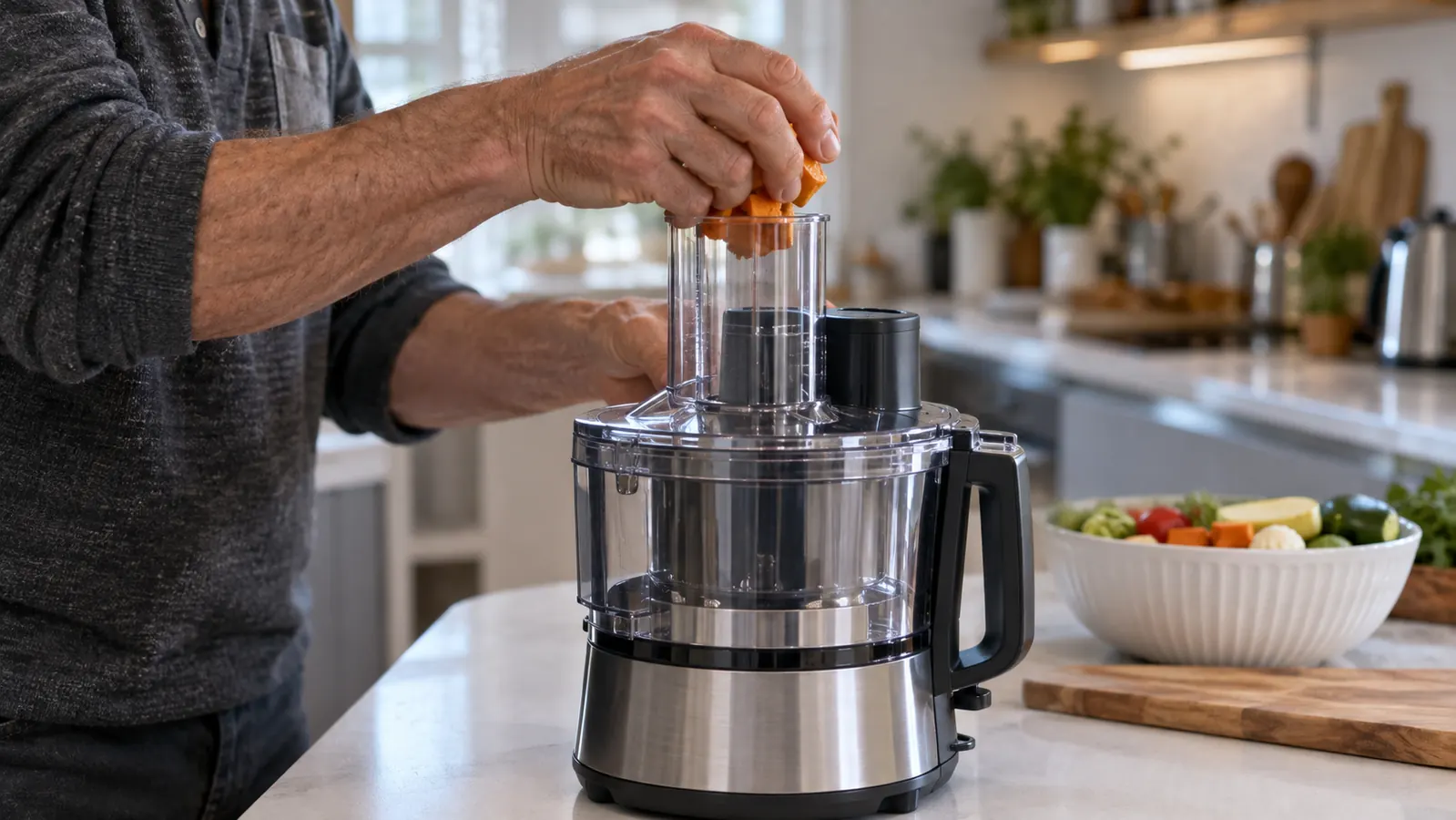
Why a Food Processor Instead of a Knife
Before I owned one, I assumed a food processor was for people who made elaborate meals, not for someone cooking for a dog. I was wrong. The machine earns its place for three reasons. First, speed. A 14-cup bowl means I can process a whole bag of carrots at once instead of in three batches. Second, consistency. Biscuit's portions need to look the same from week to week, and the pulse button gives me that. Third, cleanup. Every part that touches food goes in the dishwasher, which matters when you are cooking on a Sunday afternoon and do not want to spend the evening scrubbing.
I will also say this. The first time I used it, I was nervous. Food processors are fast, and fast machines can turn carrots into puree if you let them. The fix is simple. Use the pulse button in short bursts and check the bowl between bursts. You are in control, the machine is not. Once I understood that, the nervousness went away and the chopping became the easiest part of my Sunday routine. Now I actually look forward to it.
Step 1: Wash and Trim the Vegetables First
Start at the sink, not the machine. Scrub carrots, zucchini, and sweet potatoes under running water. Peel anything with a tough skin if you prefer, though I leave the peel on zucchini and sweet potatoes because it softens during cooking. Cut off the ends, remove any bruised spots, and set the vegetables on a clean cutting board. This is also the moment to check your vet's list of safe vegetables. The short version: stick to the ones your vet approved and introduce new ones one at a time.
One thing I learned the hard way. Do not skip the trimming because you are in a hurry. A single bruised spot on a sweet potato can make the whole batch taste off, and a picky dog will notice. Biscuit certainly does. Take the extra two minutes at the start and the rest of the process moves faster.
I use a vegetable brush on carrots and potatoes because a lot of them still carry dirt in the crevices. After they are clean, I dry them with a kitchen towel before they go into the feed tube. Wet vegetables are fine, but dry ones pulse into cleaner pieces and leave less liquid in the bowl. Small details like this are the difference between a batch that looks like a careful prep and one that looks like mush.
Step 2: Cut Everything Into Feed-Tube-Size Pieces
The Cuisinart's extra-large feed tube is the feature that changed my routine. You do not need to dice vegetables into tiny cubes before they go in. You just need pieces that fit through the tube. For me, that means cutting carrots into two-inch lengths, halving zucchini lengthwise, and quartering sweet potatoes. The bowl sleeve assembly pushes the food down safely, so I never use my fingers near the blade.
This step feels like cheating the first time you do it. I remember looking at the big chunks and thinking there was no way they would come out chopped. They did. The 720-watt motor handles raw vegetables that a knife would struggle with, and the result is a uniform chop that cooks evenly. If a piece is too long to fit, that is the only time I take the knife out again.
One more tip. I fill the feed tube in batches rather than dumping everything into the bowl at once. A partly empty bowl lets the pieces move around and chop evenly, while an overloaded bowl just spins in place. This is the kind of detail you only learn by watching the machine work, and it took me a few Sundays to notice.
Step 3: Use the Pulse Button for Even, Tiny Pieces
This is the heart of the whole process. The machine has two controls, on and off/pulse. For dog food vegetables, I use pulse almost exclusively. I add the chunks to the bowl, put the lid on, and press pulse in one- or two-second bursts. Between bursts, I let the blade stop completely and check the size of the pieces. When most of them are about the size of a pea, I stop.
Why pulse instead of just turning it on? Because a running blade keeps spinning after you let go, and in that extra second it can turn a perfect chop into mush. Pulse gives you control. If you want smaller pieces, pulse a few more times. If you want a puree for a dog who prefers soft food, hold the button a little longer. The same machine does both, and that range is why I reach for it instead of a knife.
If you are cooking for an older dog, you may want the pieces smaller than pea-size. That is easy to do. Pulse a few more times and check again. If you are cooking for a dog who inhales his food, larger pieces can slow him down a little, though you should still ask your vet about the right texture. The point is that the machine gives you choices. A knife gives you a sore wrist.
Step 4: Switch Discs When You Want Consistent Slices or Shreds
Most weeks I chop, but some recipes call for slices or shreds. The Cuisinart comes with a stainless steel standard slicing disc and a medium shredding disc, and swapping them takes about ten seconds. The slicing disc gives me even 4mm rounds, which I use for zucchini when I want it to cook down gently. The shredding disc makes quick work of carrots, and shredded carrots disappear into a batch of food in a way that picky eaters do not notice.
The discs store in the bowl sleeve assembly, which is a small detail I appreciate. Nothing gets lost in a drawer. And because the discs are dishwasher safe, they go straight into the rack with everything else. If you are only ever going to chop, you may not touch the discs, but they are there when you want them.
A note on the chopping blade. It stays in the bowl for most of my Sunday prep, and I only swap in the discs when a recipe calls for them. The blade handles everything from soft zucchini to dense sweet potato without complaint. If you are new to food processors, start with the blade and get comfortable with pulse before you try the discs. One thing at a time.
Step 5: Portion, Freeze, and Clean Up
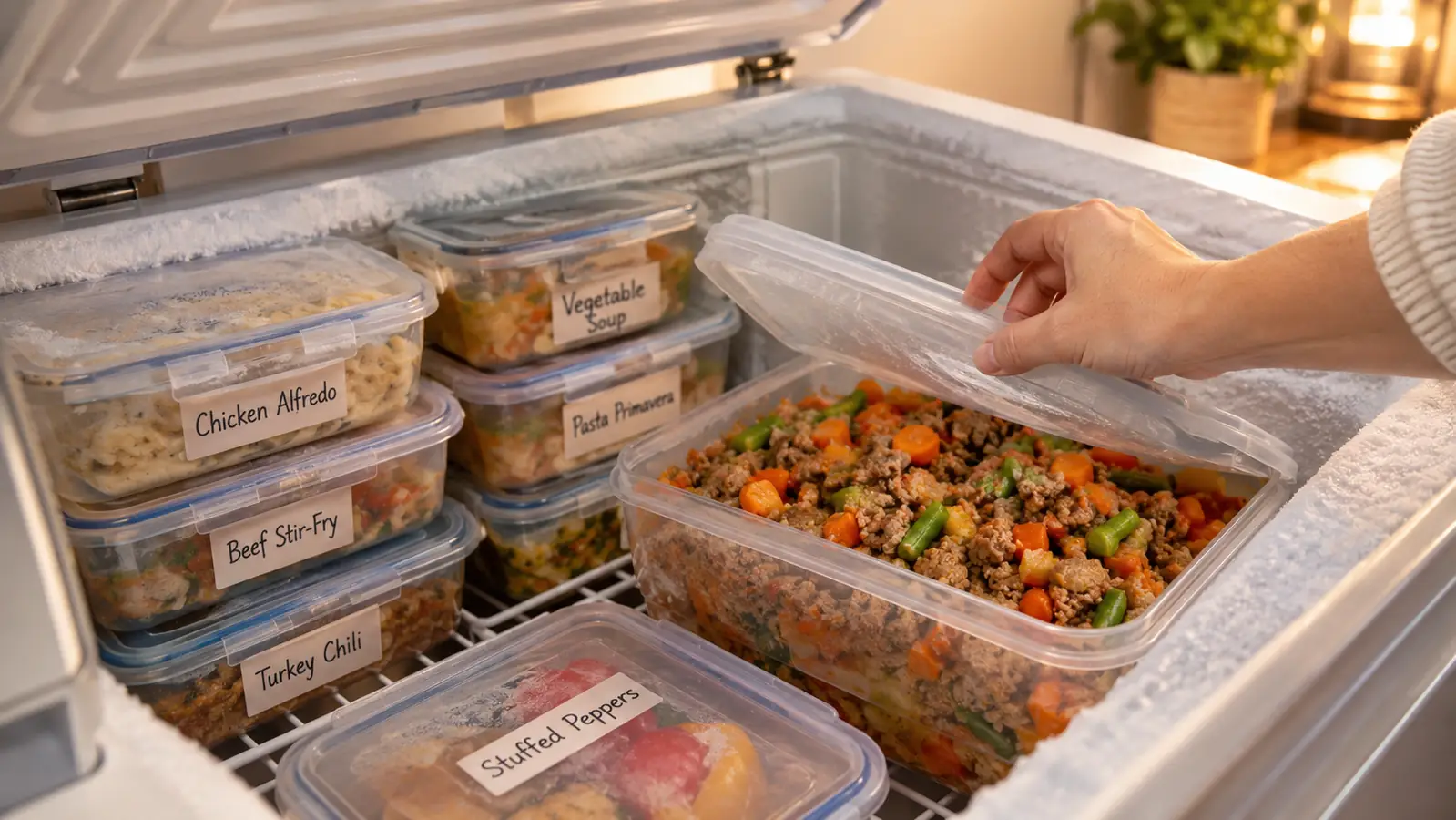
Once the vegetables are chopped, I mix them with the cooked protein and grains my vet and I settled on for Biscuit. Then I portion the food into containers, one per meal, and put them in the chest freezer in the garage. On Sunday afternoon I cook, and during the week I move the next day's portions to the refrigerator the night before. The routine took me a few tries to get right, but now it is automatic.
Cleanup is where the Cuisinart earns its keep. The bowl, lid, feed tube, and discs all go in the dishwasher. I rinse the bowl right after emptying it so nothing dries on, but that takes fifteen seconds. When I used a knife, I spent the same time scrubbing a cutting board and a peeler. Now I close the dishwasher door and I am done.
I label every container with the date and the contents. It sounds fussy, but after a month of frozen portions, you will not remember which batch had the zucchini and which one did not. I use a permanent marker on the lid, and I write the date in big numbers. Biscuit does not care, but I do, and it keeps me honest about how long food has been in the freezer.
What Else Helps
Three things make the whole routine easier. A digital kitchen scale keeps Biscuit's portions consistent, which is important when you are cooking for a dog with a sensitive stomach. Good storage containers that survive the freezer and the microwave save you from buying new ones every few months. And a second cutting board, one for vegetables and one for the cooked protein, prevents cross-contamination without thinking about it. None of these are fancy. They just make Sunday afternoon run smoother.
The last thing that helps is patience with yourself. The first batch I made took twice as long as I expected, and I nearly gave up. By the third Sunday, I had a rhythm: wash, trim, pulse, portion, freeze. Now the whole thing takes about an hour. If your first attempt is messy, that is normal. The machine is not the hard part. The routine is, and routines get easier.
Pulse in short bursts, check the bowl between bursts, and a whole bag of carrots goes from whole to pea-size in under a minute.
Start With the Tool That Made Batch Cooking Stick
If you are cooking for a dog with a sensitive stomach, the vegetable prep should not be the reason you quit. The Cuisinart 14-cup food processor, with its 720-watt motor, extra-large feed tube, and dishwasher-safe parts, turned my Sunday routine from a chore into a calm hour. Check the current price on Amazon and see if it fits your kitchen.
Amazon Check Today's Price on Amazon →